Private homeschool programs or private online school?
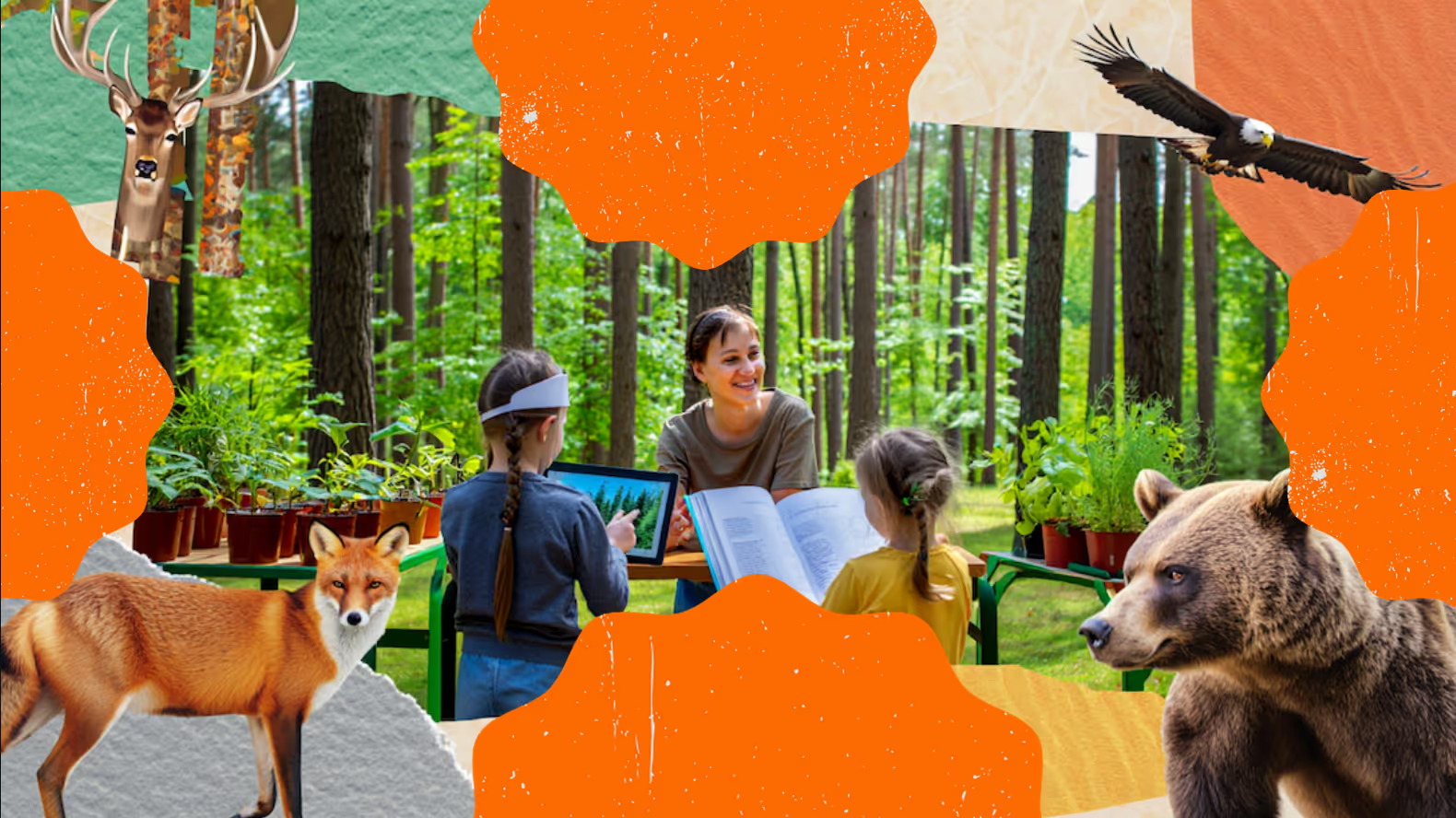
Are you at a crossroads when it comes to your kiddo’s education? Maybe traditional schools aren’t working, but the idea of managing a full homeschool program on your own feels too overwhelming. You may even have started using a private homeschool program, only to find that the lack of structure and direction is holding your kiddo back.
In that case, a private online school might be a better fit. Your kiddo still learns at home, but you get the built-in structure and quality of a traditional school and a more personalized learning experience provided by expert teachers.
In this article, we dive into how private online schools are redefining education for modern families and when they might be a better fit than private homeschool programs.
When following a private homeschool program can get tricky
Homeschool is a big job, especially when you’re already balancing a million other things that come with raising a family. But it becomes even trickier when:
Your kiddo isn’t interested in the curriculum
You spent hours scrolling Reddit threads and reading blog posts to find that perfect curriculum for your kiddo — the one with glowing reviews and just enough flexibility. You’re confident and ready. But there’s a major problem: your kiddo just doesn’t vibe with it.
This is more common than you think. A curriculum can seem amazing on paper (or online), but once you’re a few weeks in, it becomes clear it’s either too rigid, too loose, or just not engaging enough for your child.
Then there’s the mountain of options. Traditional, Charlotte Mason, classical, unschooling, Montessori, unit studies, each with its philosophy, strengths, and structure. Choosing one is tough enough. But what if your child thrives in hands-on science but prefers a classical approach to reading? What if they need more support in math but want independence in writing?
Homeschooling often means piecing together different resources, subject by subject. You’re constantly trying to ensure your child stays on grade level, feels excited to learn, and doesn’t burn out. Finding that balance can take a lot of trial and error.
You realize you just don’t have the time
Homeschooling means you’re no longer just a parent. You become the principal, teacher, guidance counselor, and sometimes even IT support. While you want to give your child the best, it’s quickly becoming clear that homeschooling takes more time, energy, and planning than you imagined.
And if you have more than one child? Multiply that effort. Teaching different grade levels and subjects simultaneously requires tailoring lessons, managing each child’s pace, and staying present for every learning moment.
The truth is, it’s hard for one parent to be an expert in everything. As your child grows, especially into the upper elementary or middle school years, subjects become more complex. Math might involve pre-algebra. Science might require lab activities. Keeping up with it all isn’t so simple.
You don’t have support when you need it
Maybe your child asks a tricky question, one you know the answer to, but can’t explain in a way that makes sense to them. Or maybe they’re stuck on a concept you’ve gone over three times, and now everyone’s feeling frustrated.
Despite your best efforts, it can start to feel isolating when you run into challenges. You’re in charge of researching new strategies, coordinating with a tutor, or finding additional resources.
Sometimes, your kiddo needs more than just a lesson. They need encouragement from someone new, a different teaching style, or more personalized learning. And sometimes, you need support, too.
Your kiddo isn’t socializing
One of the most common concerns with homeschooling is that your child isn’t getting enough socialization. Over time, limited social interaction can lead to problems like trouble forming friendships, increased anxiety, or even behavioral issues that stem from feeling disconnected.
You’ve probably looked into activities like art classes, sports, or co-ops, but fitting them into your schedule is another challenge in itself. Also, when the other kids in those extracurricular activities all attend the same public school, your child might still feel like an outsider.
Some families are lucky enough to find local homeschool groups that meet regularly, but that’s not always the case. It takes intention, creativity, and a lot of coordination to create the kind of social environment that many kids naturally get in a traditional school setting.
You realize you might face validation problems down the road
Homeschooling can feel like the right choice right now, but what about a few years from now? You might be planning to transfer your child back into a traditional school for middle or high school. Or maybe you're thinking ahead to college prep or other formal programs.
Either way, the question becomes: How will their education be recognized?
Many private homeschool programs aren’t accredited, which means they don’t come with official transcripts, grade reports, or standardized documentation. That lack of formal recognition can complicate things down the road.
Without accreditation, you often need to take extra steps to validate your child’s learning. Even then, there’s a risk they might be placed at the wrong level when they transfer, which can lead to boredom, frustration, or a loss of interest in learning.
How private online schools meet modern demands
Many families today are looking for an education that fits into their lifestyle. Online private schools offer the kind of education that’s both high-quality and flexible.
Personalized approach with built-in structure
You’re not solely responsible for creating the structure or customizing every lesson — it’s already built in.
Private online schools offer flexibility and personalization within a clear, organized framework. Your child gets learning that adapts to their pace and style, without things feeling chaotic or falling through the cracks.
Clear routines, consistent schedules, and guided lesson plans help kids build strong learning habits and feel secure and confident.
Rich curriculum at the right level
One of the biggest challenges for parents is making sure their child is learning what they need, and at the right level.
Private online schools provide a comprehensive learning experience that covers all core subjects. With expert-designed curricula and experienced educators, your child is placed where they belong academically.
Live classes led by expert teachers
Many online private schools offer live, interactive lessons with teacher support. Certified teachers lead discussions, answer questions, and provide feedback in real-time.
Educators are trained in online teaching and know how to create a connection through a screen. Whether it’s math, science, literature, or art, your child is learning from someone who knows how to make the content clear, engaging, and age-appropriate.
Live online classes also allow teachers to adapt lessons on the fly based on class needs, whether that means slowing down, switching gears, or spending extra time on a complicated subject. This flexibility helps ensure every child feels seen and heard in a supportive environment.
More opportunities for social connection and community
Private virtual schools actually offer more opportunities for connection than many families expect. Unlike homeschooling, where social time usually requires planning, online schools build social opportunities into the day by design.
From live class discussions and group projects to virtual clubs and field trips, students are consistently interacting and building relationships. Shared experiences help kids feel part of a bigger community and a sense of belonging.
If you’re part of an international online school, your kiddo might even collaborate with other children from around the world. That kind of global reach is something most traditional schools or homeschool setups might not have.
Dedicated support for students and families
Your family isn’t in this alone. Private online schools provide support that goes beyond just academics. Whether your kiddo needs help with schoolwork or a little emotional support on a tough day, there’s always someone they can turn to.
Many private online schools offer open lines of communication, helpful resources, and parent workshops, so you can feel informed, empowered, and connected every step of the way.
Accreditation for smooth educational transitions
With an accredited online school, you can feel confident that your child is receiving a strong, quality education. It also means your kiddo will have access to official transcripts, grade reports, and documentation to prove their academic progress.
For international families, it’s even more essential. An accredited online education is more likely to be recognized across borders, making it easier to continue studies in a different country without starting over or falling behind.
Is a private homeschool program or private online school a better fit for your family?
There’s no single "right" answer. Whether homeschooling or an online school is a better fit depends on what feels sustainable and fulfilling for everyone involved.
These questions can help guide your decision:
- How involved do you want to be in daily teaching?
- How much structure and support does your child need?
- What kind of learning helps them thrive? Live classes or self-paced learning?
- What are your child's long-term academic and future goals?
And of course, ask your kiddo! They might have strong opinions about how they like to learn, what kind of support helps them most. Involving them in the decision helps them feel more empowered and excited about whatever path you choose together.
Why bina is the right pick for modern families
bina was built with modern families in mind — families who want a high-quality education that doesn’t come at the cost of flexibility, personalization, or connection.
Precision education: Structure meets personalization
At bina, precision education means your child will learn through a well-structured curriculum that’s tailored to who they are and how they learn best.
Small class sizes of up to eight students allow our kiddos to receive about three times the attention they’d get in a typical private elementary school program. Our certified teachers truly get to know students, their interests, their learning style, and what helps them thrive.
Students are grouped by their age and ability to ensure they’re both supported and appropriately challenged. Lessons are adapted in real-time based on our students’ needs. Whether your child needs a little extra help in one area or is ready to soar ahead in another, bina helps them grow with confidence.
Engaging curriculum designed for holistic growth
Online learning is anything but one-dimensional at bina. Our curriculum is designed to spark curiosity, encourage creativity, and nurture children academically, socially, and emotionally.
Through thematic biomes, our students explore core academics in an interconnected way. Project-based learning (PBL) is woven throughout, with hands-on, collaborative projects that align with the UN's Sustainable Development Goals. These PBL projects help children build essential skills like research, critical thinking, problem-solving, creativity, and digital literacy.
Our curriculum also prioritizes social and emotional growth. With daily check-ins, intentional SEL activities, and a collaborative online classroom environment, kids learn to manage big emotions, navigate conflict, build friendships, and make tough decisions — skills they’ll carry with them to school, relationships, and life beyond the classroom.
International accreditation prepares your kiddo for a global future
Internationally accredited by Cognia, bina meets rigorous global standards for teaching, learning, and academic excellence. You get peace of mind knowing your kiddo is receiving a high-quality education that is recognized anywhere in the world.
Whether your family moves, your kiddo transfers schools, or you're planning ahead, bina’s accreditation ensures smooth transitions and a clear academic path forward.
Start your kiddo’s education journey with bina
A private online school that feels personal, connected, and built for today — bina might be exactly what you’re looking for in an at-home education. Learn more to see if we’re a good fit.
FAQs
How flexible is the daily schedule in a private online school compared to independent homeschooling?
Independent homeschooling offers full control over the schedule and curriculum, but with that freedom comes the pressure to manage it all.
Private online schools offer more structure with live classes and clear expectations, but your child still has the flexibility to access a quality education from anywhere with an internet connection.
How is screen time handled in a private online school?
Private online schools are designed with intentional screen time in mind. Through real-time learning, kids engage in active, not passive, experiences.
They collaborate, solve problems, and interact with their teachers and other students, with plenty of breaks, hands-on tasks, and movement throughout the day.
How does the cost of a private online school compare to homeschool programs?
Homeschooling can be low-cost or surprisingly expensive, depending on materials and support. While some families use free resources and community programs, others invest in premium curricula, tutors, or activities. Those costs can add up quickly.
Private online schools offer more predictable, all-in-one pricing that covers curriculum, teacher-led classes, resources, and support. You get the benefits of a structured education without hidden expenses.
Accredited, full-time school for grades K-12
Bring the best of the classroom to your home
See if we're a fit
More to read

7 best online homeschool programs for middle school in 2026
Learn about the best online homeschool programs for middle school to give your child the best-fit education.


The best online middle schools in 2026 and how they’re transforming education
Considering an alternative to public, in-person middle school? Learn about the best online middle school options available for your kiddo in 2026.
Alternative school meaning, explained for parents
From online learning to project-based models, find out what alternative school really means, and why more families are choosing this flexible path.