How to build a homeschool curriculum for your 2-year-old
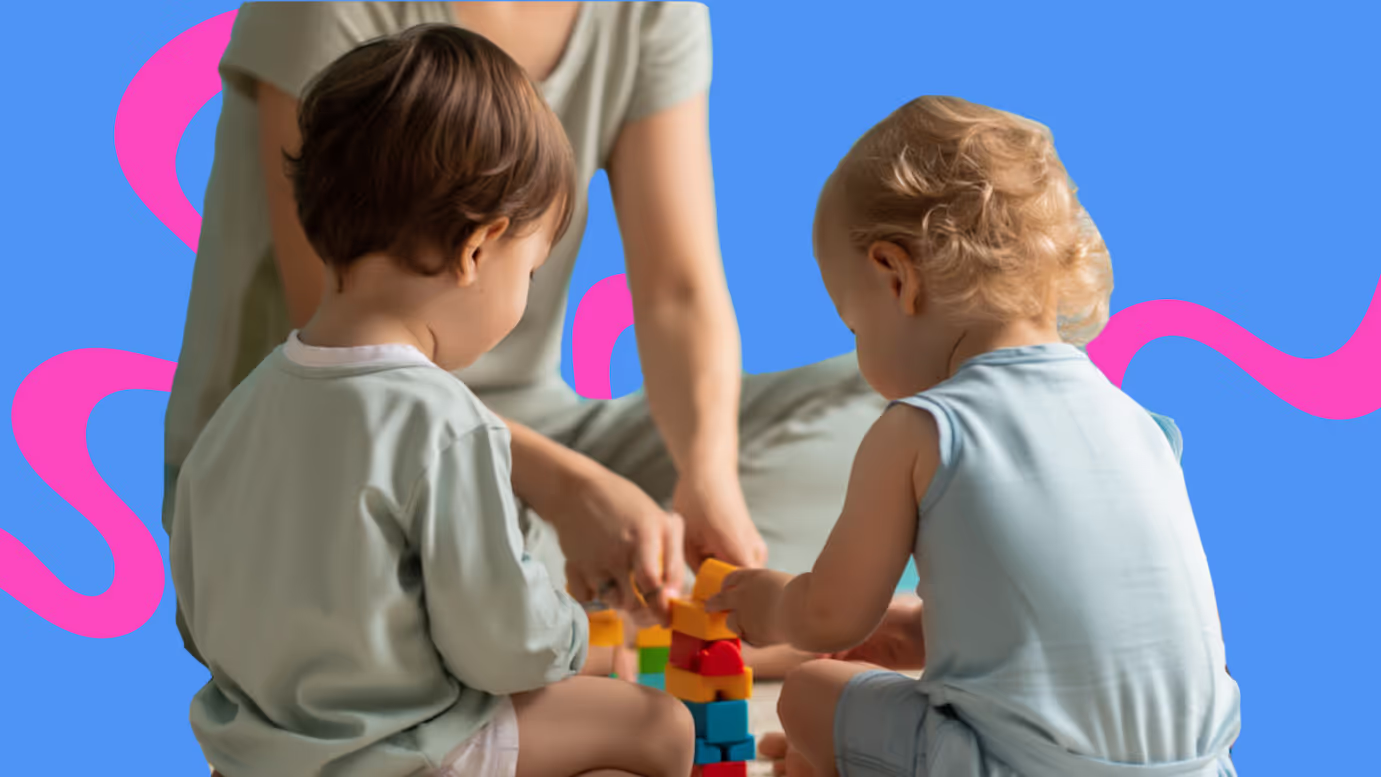
Building a homeschool curriculum for your 2-year-old? Forget the worksheets. It’s all about play, connection, and curiosity.
Toddlers don’t need to know about capital cities and algebra. They need to know how to move their bodies, solve problems, communicate with others, and explore connections in the world. And what better way to do that than to turn everyday activities into learning opportunities?
Think cooking, gardening, tidying, and storytelling. These are all chances to practice speaking, sorting, moving, focusing, and imagining. Making learning active and hands-on is how you build a child who’s confident, curious, and ready to learn about the world.
Let’s dive in further to explore the developmental stages your 2-year-old is moving through, the activities that support this, and some learning resources to help you get started.
What homeschooling a 2-year-old really means
When you homeschool a 2-year-old, you’re not setting up a formal classroom with worksheets and lesson plans. You’re using everyday life as the backdrop for learning. After all, toddlers learn best in short bursts of play and discovery that link to real-world experiences.
Think about it like turning everyday life tasks into play-based learning:
- Folding laundry becomes a sock-sorting exercise
- Putting away groceries is a chance to stack cans by size and color
- Cooking dinner becomes a mini math lesson where your toddler counts spoonfuls or cuts cookie shapes
Whether it’s bathtime, cleaning time, or mealtime, daily routines give you the perfect opportunity to teach your toddler to name what they see, make choices, and solve small problems. This gives them the confidence and curiosity to do things on their own.
And when you follow a kid’s curiosity instead of rigid timetables and plans, you’ll see their interest spark connections that encourage them to want to learn more.
Key developmental areas for 2-year-olds and activities to support growth
At age two, children are exploring how the world works and what their place is within it. Their brains are developing hungrily across every area, from language to movement to emotion. But they don’t learn these skills from textbooks. They learn them by playing, copying, and repeating.
The best way to support this growth is to set up situations where they can explore without boundaries. At the same time, you need to give them the language to name and reflect on what they’re doing.
Here are the skills 2-year-olds are developing, and some ideas for how you can turn everyday life into early learning activities to nurture those skills.
Language and communication: Talk, sing, tell
Around age two, you’ll see your kiddo’s language start to unfold.
According to the American Speech-Language-Hearing Association, by two, most kids can follow simple instructions, string two words together, and name familiar objects or people.
But between the ages of two and three, language really takes off.
By three, kids start to retell parts of a story or describe what they see. This jump happens because of what researchers call “visuo-linguistic alignment.” This is where the brain begins to connect words to images, allowing little ones to make sense of what they see and hear.
You can encourage this growth through play and conversation, with learning activities like:
- Reading picture books and asking observational questions like, “Where’s the dog?” or “What’s happening in this picture?”
- Narrating daily experiences like, “We’re cleaning our teeth. The water is cold.”
- Singing simple songs and pausing for your child to fill in the blank
- Playing simple naming games with toys or food
As your child’s confidence grows and their speech becomes more complex, it’s time to move them to deeper comprehension. Do this by inviting them to “read” the picture books back to you or to narrate what’s happening around them as they move through the world.
Movement and coordination: Move, climb, play
At two, kids are developing gross motor skills (big actions) and fine motor skills (small actions) at the same time.
According to the Buckinghamshire Healthcare NHS, by two, kids should have developed gross motor skills like walking by themselves, pulling toys along while walking, kicking a ball, and standing on tiptoes.
By three, they should be walking up stairs, riding a tricycle, and throwing a ball overhand.
As for fine motor skills, a 2-year-old should be confident enough to scribble without help, pour contents out of a container, and turn pages in a cardboard book.
By three, they have more pencil control, can rotate dials on toys, and build a tower of six or more blocks.
But how do you support the transition from clumsy movement to coordinated control? Check out these hands-on activities:
- Create safe obstacle courses with cushions to climb, crawl, and balance.
- Practice tiptoe walks and animal walks (bear crawl, bunny hops).
- Offer chunky crayons for scribbling circles and lines.
- Pour water from cup to cup during bath time to practice control.
As their movement becomes more advanced, add in equipment like tricycles, climbing frames, and kiddie scissors.
Early problem-solving and independence: Explore, sort, solve
Problem-solving is the key to independent living. When children learn how to overcome challenges, confidence and resilience grow, and they start to think for themselves.
At two, kids are just starting to recognize problems and look for solutions. At this age, they can find objects under two or three layers, begin sorting by color or shape, and point to objects you name. By three, they’re pretty adept at using mechanical toys, completing basic puzzles, and naming colors.
The key to teaching problem-solving is showing your little one how to think critically and make decisions. The best way to do this? Give your kiddo challenges and talk about how you’ll find a solution together.
Here are a few problem-solving activities that get the brain ticking in this way:
- Offer simple two to three-piece puzzles and celebrate when they complete them.
- Stack cups or bowls by size.
- Pair socks or match lids to containers during chores.
- Give them a choice between two snacks or two books.
As you move toward more complex problem-solving, introduce cause-and-effect toys where levers, gears, and buttons show how actions create outcomes. This helps children understand how their behavior connects to what happens next.
Focus and attention: Watch, listen, follow
Two-year-olds find it hard to concentrate. As the NHS explains, they are in a stage of rigid attention. This means they can only focus on concrete tasks. Effectively, their concentration is involuntary and singular. They might focus on building blocks for a short time, but they’ll ignore an adult trying to help them.
At three, though, kids can channel their attention toward one task better, but they still can’t deal with more than one stimulus at once. They need help from adults to shift their attention.
However, just because a kiddo can’t focus easily doesn’t mean they don’t have the potential to develop this skill. Research published in Early Childhood Research Quarterly shows that children who learn to focus better in early years have an almost 50% higher chance of completing college later.
To develop better attention skills, practice activities like the following:
- Stack blocks until they tumble.
- Play “copy me” games, where they follow your lead.
- Listen to short songs and match the words to movements.
- Blow and follow bubbles to pop them.
Once they master these simple games, level up to more complex concentration activities, like threading pasta onto a string or listening for the sounds of cars and birds.
Social-emotional skills: Feel, share, imagine
When you teach young children social and emotional skills, you teach them how to understand their feelings and actions, and how those behaviors affect others. This helps them cope with emotional moments and build relationships.
But at two, tantrums are common, and kids still need a lot of reassurance. Equally, they don’t understand the concept of sharing, so they play alone.
By three, children feel more confident, as they begin to separate themselves from their caregivers. They start to realize a sense of self, which is the first stage of building relationships.
Activities that name feelings, encourage sharing, foster imagination, and aid reflection help kids understand their own emotions. At the same time, they begin to see things from other people’s viewpoints. This is the first step toward the empathy and cooperation skills they need for healthy social interaction.
Try these social and emotional (SEL) activities to nurture self-awareness and a sense of community:
- Role-play with dolls and stuffed animals.
- Use mirrors to make faces and name the emotions.
- Do art projects alongside each other and talk about what you’re both making.
- Name your emotions and feelings as they happen.
As they start to get a handle on these simple SEL games, they play more cooperatively. Try building a tower together and taking turns to add bricks, or paint a shared picture where you each add your own color alternately.
Homeschool curriculum programs and resources for 2-year-olds
Looking for more structure to your preschool homeschool curriculum?
Here are some of the best programs and resources that provide a backbone to toddler learning without losing the freedom of play.
Brightly Beaming Resources (Letter of the Week)
This free online preschool guide introduces one letter, shape, number, or theme each week. This helps your little one master the idea without getting overwhelmed by the whole alphabet or number set.
Each unit includes crafts, songs, and basic, downloadable worksheets. You benefit from a rhythm to follow, without needing to use a rigid plan. It’s low-prep and flexible, so you can personalize learning, while leaving lots of room for play and inquisitiveness.
Busy Toddler’s Playing Preschool
This paid-for homeschool program was created by early childhood educator Susie Allison and offers a full 190-day curriculum. It’s aimed at 2- to 5-year-olds and features short thematic units that cover science, math, reading, and art.
It is structured, but it’s not regimented. It’s great for parents who want guidance, but don’t want to follow worksheets.
And the best part? Each activity only takes a few minutes, so children can explore the concepts without losing focus.
Busy Toddler’s Play at Home Guides
If you’re looking for a more affordable option, Busy Toddler also offers a blog full of free printable guides, packed with hands-on ideas for activities using things you already have at home. Think cups, spoons, cardboard boxes, and stickers.
The different tasks are grouped into skill areas, so you can focus on specific development areas like fine motor, sensory, or early math.
Not only is it easy and quick to set up, but it’s also very affordable.
Experience Early Learning (Experience Toddler)
This subscription box delivers monthly themed packs to your door. You’ll get storybooks, crafts, and manipulatives that link literacy, early math, and emotional learning through creative play.
It’s easy to follow for both kids and parents, and gives you professional-quality activities with minimal prep.
Teaching Littles (Blog and Printables)
Teaching Littles is a parent-hub packed with flashcards, printables, and activity ideas for toddlers.
It’s not a set curriculum. It’s more of a mix-and-match resource center where you can build your own homeschool plan from their library of practical materials.
Sample homeschool curriculum structure for a 2-year-old
You don’t want to create a strict timetable for your 2-year-old, but it is helpful to add some structure and predictability to your day.
Here’s an example of how you can organize a homeschool curriculum for early learners, without it feeling prescriptive.
Morning
-
Circle time (10 minutes):
- Songs, a short story, and naming the day or weather
- Builds routine and language
-
Movement play (15 minutes):
- Obstacle course, dancing, or ball play
- Supports gross motor skills
-
Learning station (10 minutes):
- Sorting blocks by color, stacking cups, or scribbling with crayons
- Focuses on early problem-solving and fine motor development.
Midday
-
*Practical life (during meals/snacks):*
- Help pour water, scoop fruit, or wipe the table
- Encourages independence and coordination
-
Quiet time (20–30 minutes):
- Looking at books, listening to music, or doing simple puzzles
- Develops focus and calm self-regulation
Afternoon
-
Creative play (15 minutes):
- Finger painting, playdough, or pretend cooking
- Strengthens imagination, social-emotional skills, and fine motor control
-
Outdoor exploration (20 minutes):
- Nature walk, collecting leaves, or watching bugs
- Encourages curiosity, language, and problem-solving
-
Storytelling time (10 minutes):
- Parent retells a story, then lets the child “read” the pictures back
- Builds narrative skills toward age-3 milestones
Evening
-
Routine helpers:
- Encourage your toddler to help with simple chores like putting toys away or matching socks
- Builds responsibility and independence
-
Wind-down:
- Songs, cuddles, or simple pretend play
- Reinforces emotional security and social bonding
The next steps toward building well-rounded learners
Homeschooling a 2-year-old isn’t about strict schedules or formal lessons. It’s about creating a rhythm of play, discovery, and connection that helps your child grow with confidence.
At this stage, you’re laying the groundwork for curiosity and independence. These qualities will carry them into their preschool and school years with confidence and emotional stability.
As your child grows, bina offers a natural next step.
Like homeschooling, our international online school values individualized learning, flexibility, and family connection. And because we’re fully online, families aren’t tied down by the rigid structures of traditional schooling.
Instead, they gain the freedom to learn from anywhere, with a curriculum that adapts to their child. Students benefit from small group classes, personalized attention, and a globally minded education that grows with them.
For families who begin with homeschooling, bina provides a seamless way to continue that spirit of curiosity and independence, while adding the structure, community, and academic depth of a world-class school.
Accredited, full-time school for grades K-12
Bring the best of the classroom to your home
See if we're a fit

More to read
The 6 best homeschool language arts curriculum options in 2026
Learn the top homeschool language arts curriculum picks for 2026, plus hands-on resources and tips to support reading and writing at home.


Summer homeschool curriculum ideas without school-at-home
Summer often gives parents a clearer picture of how their child actually likes to learn. Some children suddenly read for fun again. Others become more…


How to create a summer homeschool schedule that sparks learning
Learn how to build a summer homeschool schedule that keeps learning fun and flexible. Explore sample routines, tips, and examples.