Should your kiddo enroll in an online early childhood education program?
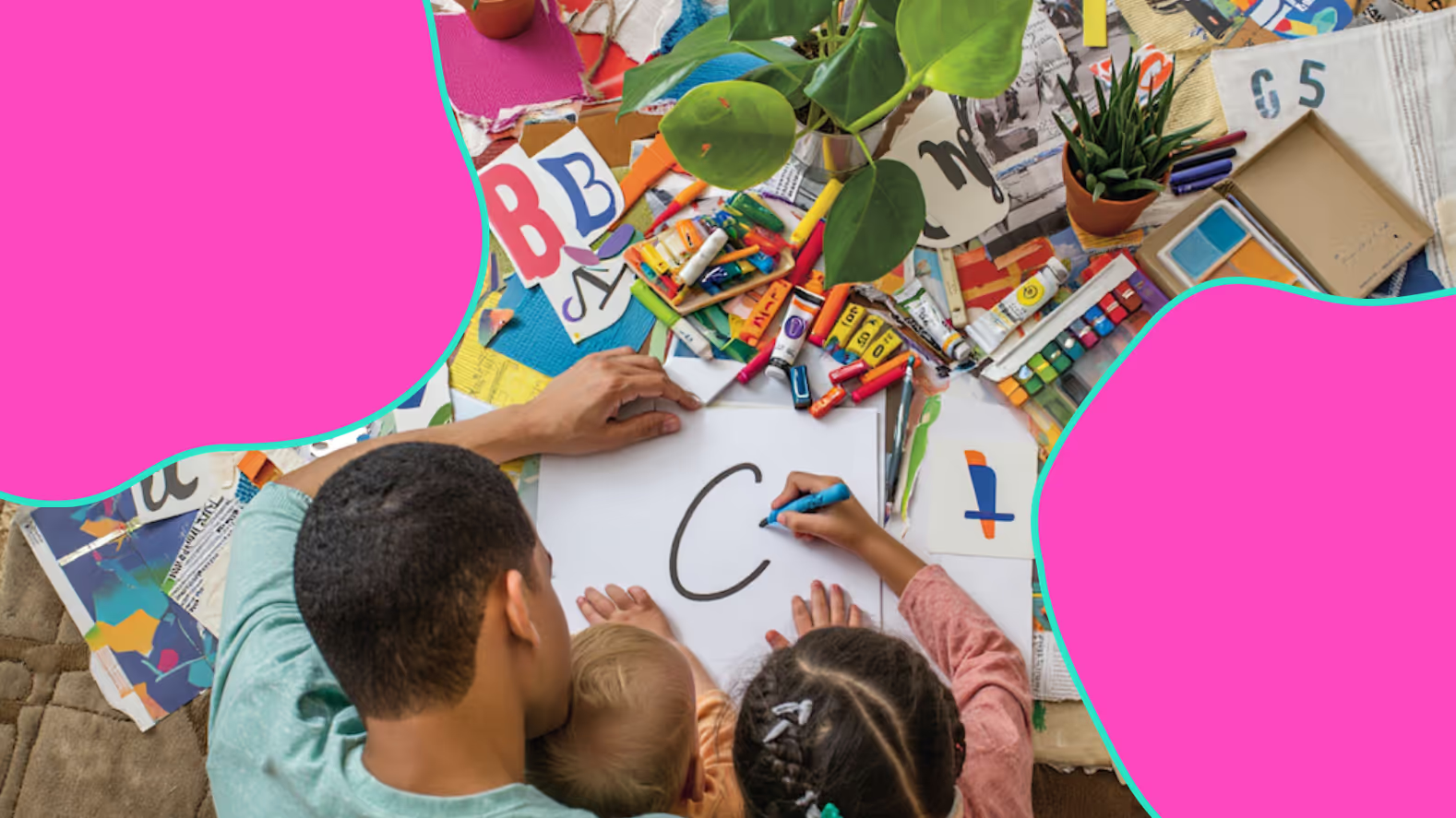
Ever wonder how your little one can build an entire castle out of sofa cushions and then defend it from imaginary dragons? Or how they transform into a chef, whipping up mud pies in the garden?
These magical moments are more than just play — they’re sparks of early learning. The best part is that you can channel this creativity and curiosity into a structured and purposeful learning journey for your kiddo.
Through an online early childhood education program, you can build a strong foundation for their development and a lifelong love of learning.
What is an early childhood education program?
An early childhood education (ECE) program is one that’s specifically designed for young children, typically from age three to five years old.
ECE programs provide a structured curriculum to support your little one’s holistic growth, which includes cognitive skills, social-emotional understanding, physical coordination, and creative expression.
These programs help kids foster a natural curiosity about the world around them and build strong foundations that prepare them for future learning. All this paves the way for a smoother and happier transition into elementary or primary school.
What are the benefits of online early childhood education programs?
The early years of your kiddo’s life, from birth to around the age of five, are when their brain works like a sponge — it’s incredibly absorbent. They soak up everything from language and social cues to healthy habits.
So, it’s the perfect time to give them plenty of mental stimulation and social-emotional support through an online early childhood education program.
Lay strong foundations for learning
Give your kiddo a launchpad in their learning journey from the comfort of home. Online ECE programs help your child build essential cognitive skills, develop creative thinking and problem-solving abilities, and understand the world around them.
They introduce different concepts in a fun and engaging way to young kids, fostering a love for life-long learning and building a strong foundation for the future.
Research shows that kids who participate in ECE are more likely to have long-term academic success. It's this very groundwork that helps your kiddo feel ready and confident for future learning adventures.
Support holistic child development across all areas
Early childhood education nurtures every aspect of your kiddo’s growth, and it’s consistently proven to have a significant positive effect on both a kid’s social skills and school progress.
Through interactive games, creative challenges, and imaginative play, young kids develop essential cognitive skills like memory, attention, and logical reasoning. Children also begin to learn important social cues. They are introduced to social and emotional learning (SEL), which helps them build self-awareness, self-regulation, empathy, and healthy relationships.
Cultivate early literacy and numeracy skills
It’s never too early to introduce the world of letters, words, and numbers to your kiddo. An online education for young kids introduces core academic subjects so they’re prepared for kindergarten. Kids gain crucial pre-reading and writing abilities, and a richer vocabulary through activities and exploration.
Your kiddo may also become familiar with counting, sorting, recognizing patterns and shapes, and mathematical reasoning. A high-quality mathematics education for three to six-year-old children helps prepare them for future mathematics learning.
Provide a secure learning environment at home
Stepping into a classroom for the first time can be a big and stressful change for children. But an online early childhood education program offers a familiar and secure alternative.
With fewer distractions and pressures associated with a traditional preschool or childcare setting, your kiddo can focus and absorb information more effectively in a place where they feel safe.
Parents also get the opportunity to oversee the learning environment directly, so you can ensure it’s always nurturing and meets your kid’s needs.
Common myths about online early childhood education
Do early childhood education programs actually teach anything worthwhile? What about being on a screen? Will my kiddo stay engaged with a virtual ECE program?
The world of exceptional online learning for little kids is still new, so a lot of people aren’t familiar with just how effective and beneficial a good program can be for young children. Let’s take a look at some of the common myths and misconceptions so you have a clearer idea of what online early childhood education offers.
Myth 1: Early childhood education isn't serious learning
Many parents still believe that early learning, especially for children under five, isn't "real" education because there’s so much “play time” involved.
But that’s far from the truth. In reality, early childhood education is serious and impactful because the stimulation helps to nurture those super-receptive young minds during a prime brain development phase. Play-based learning, games, and interactive educational experiences boost cognitive abilities. This benefit can help children in their early school years and later in life.
Myth 2: Screen time is always bad for young kids
A very common and, honestly, understandable concern is that screen time for young children is harmful. While excessive, aimless screen time can lead to short attention spans, lower physical activity, and stunted social development, not all screen time is bad for kids!
Mindlessly watching cartoons is definitely not the same as participating in a live, teacher-led online course or playing educational games.
The key distinction is between passive viewing and interactive and educational engagement — which online ECE programs provide. Using screens is beneficial when it’s intentional, supervised, and balanced with plenty of off-screen activities.
Myth 3: Online learners miss out on socialization
Quality online ECE actively fosters social development. Your kiddo will engage in live, interactive sessions with early childhood education teachers and peers, and participate in group activities and discussions that build communication, collaboration, and empathy.
Meaningful discussion is one of the strongest factors associated with a child’s sense of connection, and online learning has plenty of that.
With a little effort, parents can also find in-person social opportunities, like playdates, community groups, or local parks, to further strengthen connections.
Is an online early childhood education program right for your family?
An online ECE program is an ideal choice if it aligns with your family's needs, values, and daily routine. If these check the boxes, then it could be a great fit:
Learning that fits your family's lifestyle
Learn from literally anywhere in the world with a virtual program. The lack of geographical barriers makes learning more flexible and accessible.
This means you can find a program that adapts to different family schedules, travel plans, or remote work arrangements. Your kiddo can still receive quality education regardless of your location or time zone.
Plus, no more daily commutes that take up time and stress both you and your kid out. Learning is integrated into your family’s lifestyle, not the other way around.
Personalized approach to learning that goes beyond childcare
If you’re looking for a genuine educational experience that’s more than just childcare, ECE is a great option. Unlike typical childcare settings, it comes with clear learning objectives.
You’ll find qualified early childhood educators leading a structured program and curriculum. If the program offers a smaller class size, educators can provide individualized attention and tailor the learning experience to suit diverse learning styles, paces, and needs.
What to look for in an online early childhood education program
When it's time to choose an online early childhood education program, knowing exactly what to look for makes all the difference for your little learner:
A holistic and engaging curriculum
Prioritize a program that not only nurtures academic skills, but also your child’s whole being — their mind, body, and emotional well-being. Look for a holistic program that includes play-based lessons and hands-on engagement.
Project-based learning is incorporated into bina's curriculum development to bring learning to life. Kids learn in biomes, where they explore different subjects interconnectedly, design creative PBL projects, and collaborate with students from around the world.
Through these activities, our kiddos learn a range of important academic skills — reading, writing, numeracy, design, and technology — and life skills like teamwork, critical thinking, and problem-solving.
Our social-emotional learning commitment also means it’s a core part of our everyday lessons. Our teachers use SEL activities to help kids understand their emotions, build empathy, and navigate tricky decisions. And because of our small class size (up to six students per class for younger ages), teachers are able to do daily SEL check-ins and adapt lessons in real time based on how the class is feeling.
Strong parent partnership and communication
An effective online ECE program recognizes you as an important partner in your child's learning journey. The goal is to build a collaborative community between the family and the educators.
ECE programs should offer a clear, consistent line of communication, including regular progress updates and access to your child's teachers. This way, you’re aware of your kiddo’s learning progress and can get the support you need to help your kid learn at home.
bina understands that parental involvement and support are vital to a child’s success in class; that’s why you'll receive a report on your child’s progress and a written note from your bina teacher every quarter. Our dedicated Learning Success team also provides support to family members every step of the way.
A safe and user-friendly platform
When choosing an online ECE program, the learning platform itself should be as intuitive as the curriculum. An easy-to-use interface will help keep your child focused and probably save you a lot of headaches too.
A program that has reliable technical support ready to address any questions or issues is also a big plus — after all, learning should be focused on content, not figuring out tech.
Commitment to child safety is another important factor to consider. Look for programs that have clear data privacy policies, secure login procedures, and appropriate supervision of online interactions to keep your kiddo safe.
Early childhood education and beyond with bina
Discover how bina’s unique approach to online early childhood education helps young learners build a strong foundation, develop essential life skills, and prepare for the future.
The best part? As your kiddo gets older, they can keep learning at bina. We’re a globally accredited, digitally inspired online school for kids aged 4 to 15.
Accredited, full-time school for grades K-12
Bring the best of the classroom to your home
See if we're a fit

More to read

The best 6 online accredited homeschool programs in Texas
Explore the best accredited online homeschool programs in Texas, with tips to choose the right fit for your child and family.

Choose the right homeschool grammar curriculum for your child
Discover the best homeschool grammar curriculum for your child. Explore different types, resources, and tips to make grammar click at home.

How to Create an Awesome 2nd-grade Homeschool Schedule
Discover what a 2nd-grade homeschool schedule should include. Get tips, schedule examples, and strategies to keep your child engaged.