What is worldschooling, and will it work for my family?
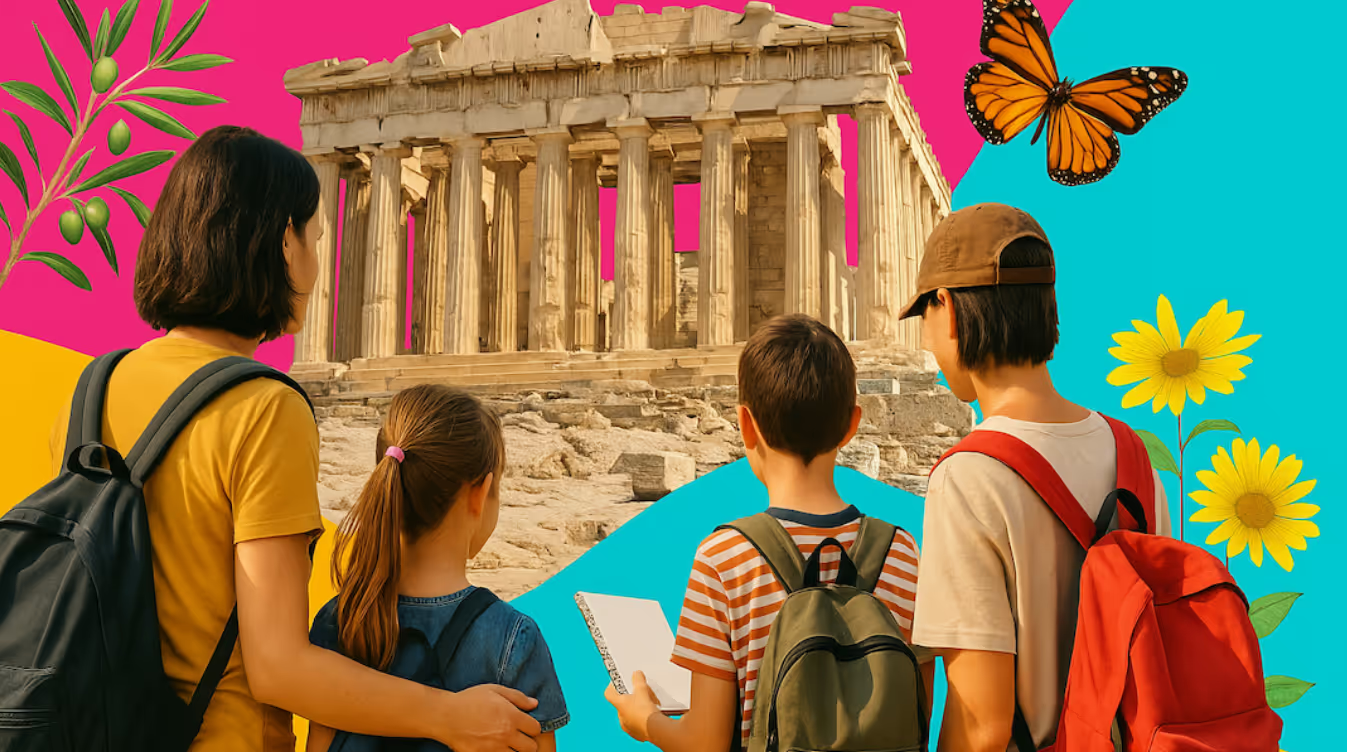
What if you could give your child the world? A chance to learn from people, places, and experiences far beyond the classroom walls.
The idea of worldschooling sounds magical — it’s learning through travel and turning each destination into a lesson. And for some families, it is an incredible experience.
But many traveling families grapple with the very real question: Will it work for us? If you’ve been curious about worldschooling, this guide will walk you through what it is, the benefits and challenges, and whether it might be a good fit for your family.
What is worldschooling?
Worldschooling is a learning approach that blends travel with education. When you wordschool, the entire planet is your kiddo’s classroom.
Experiences in the real world become just as important as what’s inside a textbook. Instead of only learning from pages and worksheets, kids learn through museums, local markets, nature trails, and cultural immersion.
Worldschooling families see learning everywhere, whether it’s in conversations with locals, unexpected adventures, or even everyday tasks like ordering food in a different language or navigating public transport in a foreign city.
What worldschooling can look like
There’s no single “right way” to worldschool. It can look different for each family. Some families lean more on online programs, while others fully embrace learning through experience.
It might look like walking through an archaeological site to understand history, spotting constellations in a night sky for science, or celebrating a cultural holiday alongside locals.
Lessons might change from season to season, depending on where you are and what your child is curious about. And because it’s so flexible, you can shape it to fit your family’s lifestyle, values, and travels.
What are the benefits of worldschooling your kiddo?
Worldschooling doesn’t just change where your child learns; it changes how they learn. It offers unique benefits that help kids grow academically, socially, and emotionally.
Learning beyond the textbook
With worldschooling, education takes place in the real world, through hands-on experiences that kids can touch, see, and feel.
Lessons are active and memorable, which helps knowledge stick. A study from the University of Chicago shows that retention rates can soar up to 90% with hands-on, experiential learning.
Everyday situations turn into natural lessons. Buying fruit at a local market becomes math practice. A walk through a museum sparks history conversations. Kids begin to see the “why” behind what they’re learning.
Follow your kiddo’s pace and curiosities
You don’t have to follow a rigid school calendar. Worldschooling allows families to design a curriculum that truly interests their children.
If your kiddo is fascinated by wildlife, you can focus on biology during a safari. If they love art, museums and street murals are great places to learn.
You can slow down or speed up depending on their child’s pace, and adjust lessons based on their interests or travel destinations. It’s the chance to let curiosity lead the way, instead of forcing every subject into a schedule that may not fit.
Open the door to a bigger world
Traveling exposes kids to new cultures, languages, and traditions. Along the way, they meet people and experience foods, customs, and daily routines that may look different from their own.
These experiences help kids build empathy, open-mindedness, global awareness, and respect for diversity, as they realize that there’s more than one way to live and learn.
More importantly, they learn to approach differences with curiosity instead of fear. This global perspective gives them confidence that they can find their place anywhere, and inspires them to imagine a future without borders.
Life skills on the go
The Sutton Trust’s Life Lessons 2024 report found that 96% of teachers believe life skills are more important than formal academic qualifications in determining how well kids do in adulthood. Traveling itself builds real-world skills kids carry far beyond childhood. Reading train schedules, being sensitive to different customs, or figuring out how to get somewhere safely are lessons that no textbooks can fully capture.
On the road, kids gain confidence to navigate real-world situations that don’t always go as planned. They learn how to handle the ups and downs, as well as the big emotions that come with them.
What challenges might come up while worldschooling?
The idea of turning the world into a classroom sounds inspiring, but be aware of the practical challenges that can get in the way.
Staying consistent with learning
Let’s be honest; without a set classroom or schedule, it can be hard to stay consistent and on track. Families face the risk of unpredictable schedules, long travel days, and time zone changes.
New environments are exciting and stimulating, but they can also be distracting. Even highly motivated kids can find it challenging to focus when there’s always something new to explore outside the door.
Many parents worry about learning gaps, too, especially in core subjects that build on each other. If your kiddo is learning fractions but misses a few weeks of multiplication practice, it can be much harder to catch up later. Johns Hopkins University estimated that each school move can cost a child nearly a month of academic progress.
On top of that, keeping track of progress can quickly get overwhelming. You might want to create your own tracking system, like a learning journal, digital logs, or a portfolio of work.
Building deep social connections with other kids
When you’re traveling, friendships often come and go. But many kids crave long-term relationships, especially with children their own age, who understand and share similar experiences.
A 2024 study from Frontiers in Psychology shows that social interactions beyond just parents significantly boost children’s emotional and cognitive growth. Without those steady connections, it’s easy to feel like they don’t belong anywhere.
So, parents need to be very intentional about finding community. Local homeschool groups, libraries, and online programs are a great place to start. Some worldschooling communities host pop-up gatherings, meetups, or even community immersion programs designed for traveling families or digital nomads.
Feeling emotionally unanchored
Life is always in motion on the road. The lack of stability and familiarity can take a toll on a child physically, emotionally, and academically.
The repeated cycle of adjusting, adapting, and leaving just to start all over again can lead to emotional fatigue. A study published in Studies in Social Science & Humanities found that kids who moved three or more times within five years show higher levels of anxiety, depression, attachment struggles, aggression, and social withdrawal.
When a child is constantly uprooted, they lose the comfort of routines and the reassurance of familiar places and faces. Without those anchors, it’s harder to build a strong sense of identity and self.
Having consistent anchors, whether it’s routines, family traditions, or road trip rituals, is so important. These small, steady touchpoints help kids feel grounded.
Tips to make worldschooling easier and happier
There’s a lot you can do to make the worldschooling journey less stressful and a lot more enjoyable for your family.
Create a flexible learning framework
One of the best ways to avoid chaos is by having a simple framework in place. It doesn’t need to be a rigid schedule. Instead, build small habits your family can rely on. Maybe it’s practicing math three times a week, or always starting the day with morning reading.
With a basic framework in place, you’re free to adjust lessons to fit the moment, knowing you can always circle back to something familiar. This takes the pressure off parents and gives kids the stability they need.
Build a go-to learning kit
Bring more consistency to worldschooling with a go-to learning kit. Even if you’re hopping between airports, train stations, or new hotel rooms, when your kiddo takes out the kit, it signals that it’s time to learn.
Include versatile, portable tools like:
- A tablet loaded with ebooks, audiobooks, or learning apps
- A travel-size art kit with sketchpads, pencils, and markers
- A journal for writing or drawing reflections
- Noise-canceling headphones
These familiar items give kids control over their learning, which is especially important when so much else feels new.
Travel slowly when you can
If you have the opportunity to stay in one place longer, take it. More time in one location gives your family time to settle, breathe, and actually enjoy the experience. It also means your kiddo has more time for deeper learning.
They can dive into a place’s culture and history, get to know locals, learn the language, or try something new. Slowing down gives kids the opportunity to build relationships and confidence in new environments.
Plus, there are the perks of less travel stress: fewer packing days, less time in transit, and more budget for experiences.
Find “third places” for stability
Beyond home (your “first place”) and school (your “second place”), families often need a “third place” — another space where kids can feel grounded and at ease.
These can be the community spots where people gather, connect, and settle in, such as libraries, cafés, parks, or community centers. Third places are emotional anchors. Something as simple as visiting the local library or returning to the same café each morning can build comfort and routine.
Third places don’t have to be physical either; they can be online. An online school or program offers kids a familiar space with steady teachers, classmates, and routines. That consistency helps them feel connected and secure, even when everything around them is changing.
Is worldschooling right for my family?
It’s natural to wonder if worldschooling fits your family. It’s a more unconventional approach that requires a lot of commitment. While it opens incredible opportunities, it also comes with very real challenges around academic consistency and emotional stability.
So, before you pack your bags, it helps to ask
- How does my child handle change or transitions?
- What kind of support do they need, academically and emotionally?
- Can we provide reliable internet access or resources while on the road?
- Do we have the energy to juggle travel and learning?
- Will my child return to traditional school later?
Worldschooling might work beautifully for some families, but others may need a hybrid approach. Many families find that a flexible, globally accredited online school, like bina, can offer the best of both worlds.
Bring bina on the road with you
With bina, you don’t have to choose between travel and quality education. As an internationally accredited online school, bina offers a structured and recognized curriculum your family can rely on anywhere in the world.
Our small, live lessons provide consistent social interaction with teachers and other kids around the world. Your kiddo joins a unique community of learners that travels and grows alongside them.
Through thematic biomes and project-based learning, kids explore real-world challenges tied to the UN sustainability goals. They can see firsthand how their learning connects to the bigger world, or even to the location you’re visiting that week.
Lessons are hands-on, collaborative, engaging, purposeful, and designed to prepare kids for the future. Along the way, they build valuable life skills, including digital literacy, problem-solving, critical thinking, and social-emotional skills.
Parents benefit too, with a dedicated Learning Success team that supports families and makes the journey more joyful. If you’re looking for an online school that lets your child learn anywhere, see if we’re a good fit.
FAQs
How can I support my child's emotional well-being while traveling?
Travel is exciting, but it can also feel overwhelming for kids trying to adjust to new places all the time.
A few simple steps can help:
-
Build familiar routines: Even small anchors like bedtime stories or morning check-ins can give kids a sense of stability
-
Create safe spaces to talk: Encourage your child to share how they’re feeling through conversation, journaling, or drawing.
-
Prioritize downtime: Balance busy days with quiet time so your kiddo doesn’t get overstimulated.
-
Stay connected: Help them keep in touch with friends and family through calls, messages, or video chats.
-
Use SEL tools: Try simple social-emotional practices like deep breathing, gratitude lists, and check-ins to support your child emotionally.
What's the best season to travel for worldschooling families?
There isn’t one official “best” season to travel, but many worldschooling families travel during Northern Hemisphere summers (June–August) and winter holidays (December–January).
These times often align with traditional school breaks, making it easier to connect at meet-ups or worldschooling hubs like Chiang Mai, Hoi An, or Bali.
Checking local world schools, groups and hubs is the best way to see who’s around when you’re planning your trip.
How do I know local worldschooling programs are safe and ethical?
Start by doing thorough research. Ask for references, reviews, or first-hand experiences from other families who have joined.
Look closely at who is running the program, what standards they follow, and whether they’re transparent about safety policies, child-to-adult ratios, and learning goals. When in doubt, choose an accredited program, like bina, to ensure both safety and academic consistency.
Accredited, full-time school for grades K-12
Bring the best of the classroom to your home
See if we're a fit
More to read
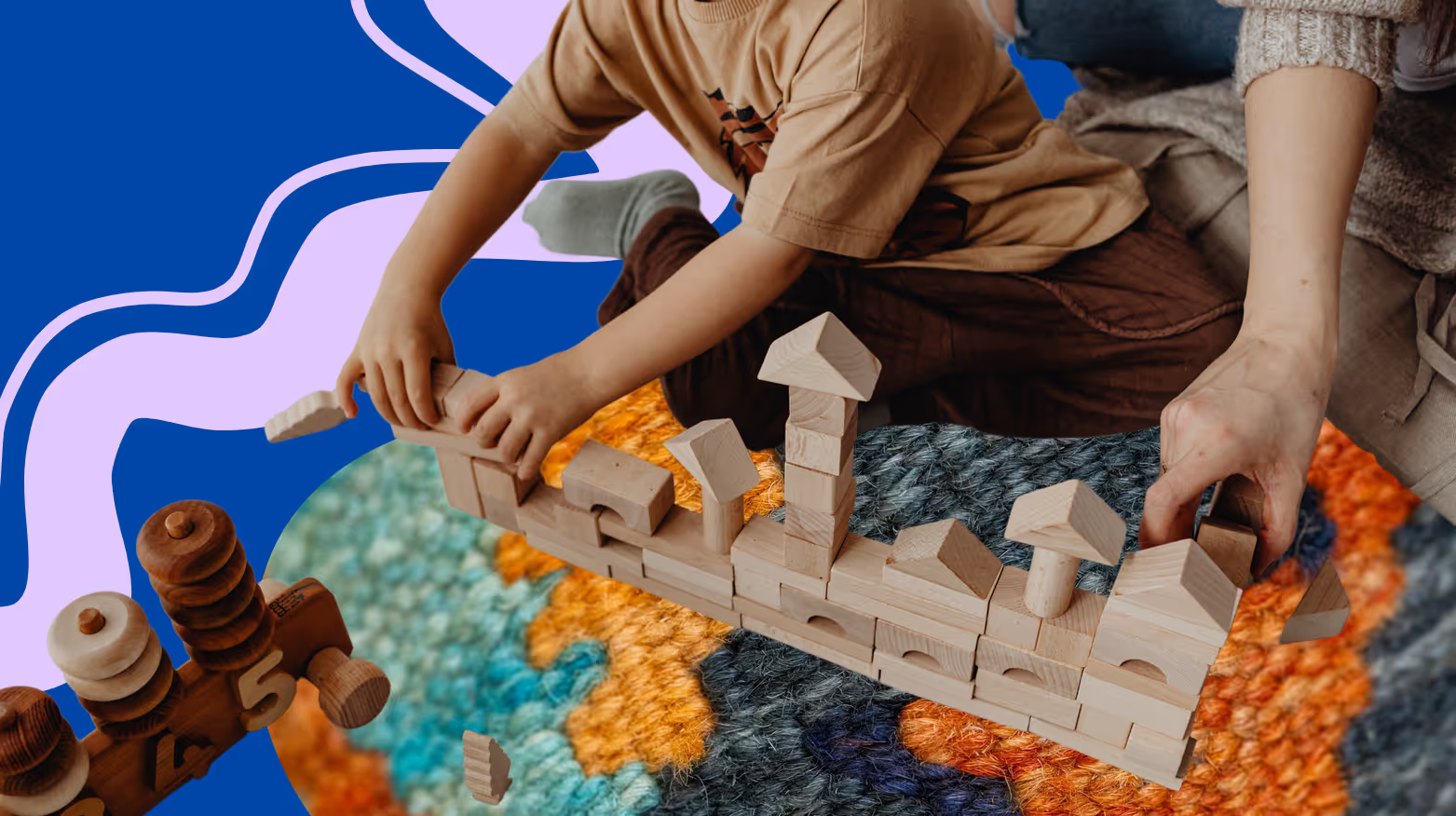
Montessori homeschool curriculum explained: Is it right for your family?
Learn what a Montessori homeschool curriculum looks like, how it works, and whether it’s the right fit for your child’s learning style.

Alternative school program options for every kind of learner
Explore alternative school programs like Montessori, Waldorf, online schools, and more. Find the right fit for your child’s needs and learning style.
Your guide to the best online elementary schools
Discover the perfect online elementary school where your child can shine! Learn what makes schools stand out and find the right fit for your family.