Alternative school program options for every kind of learner
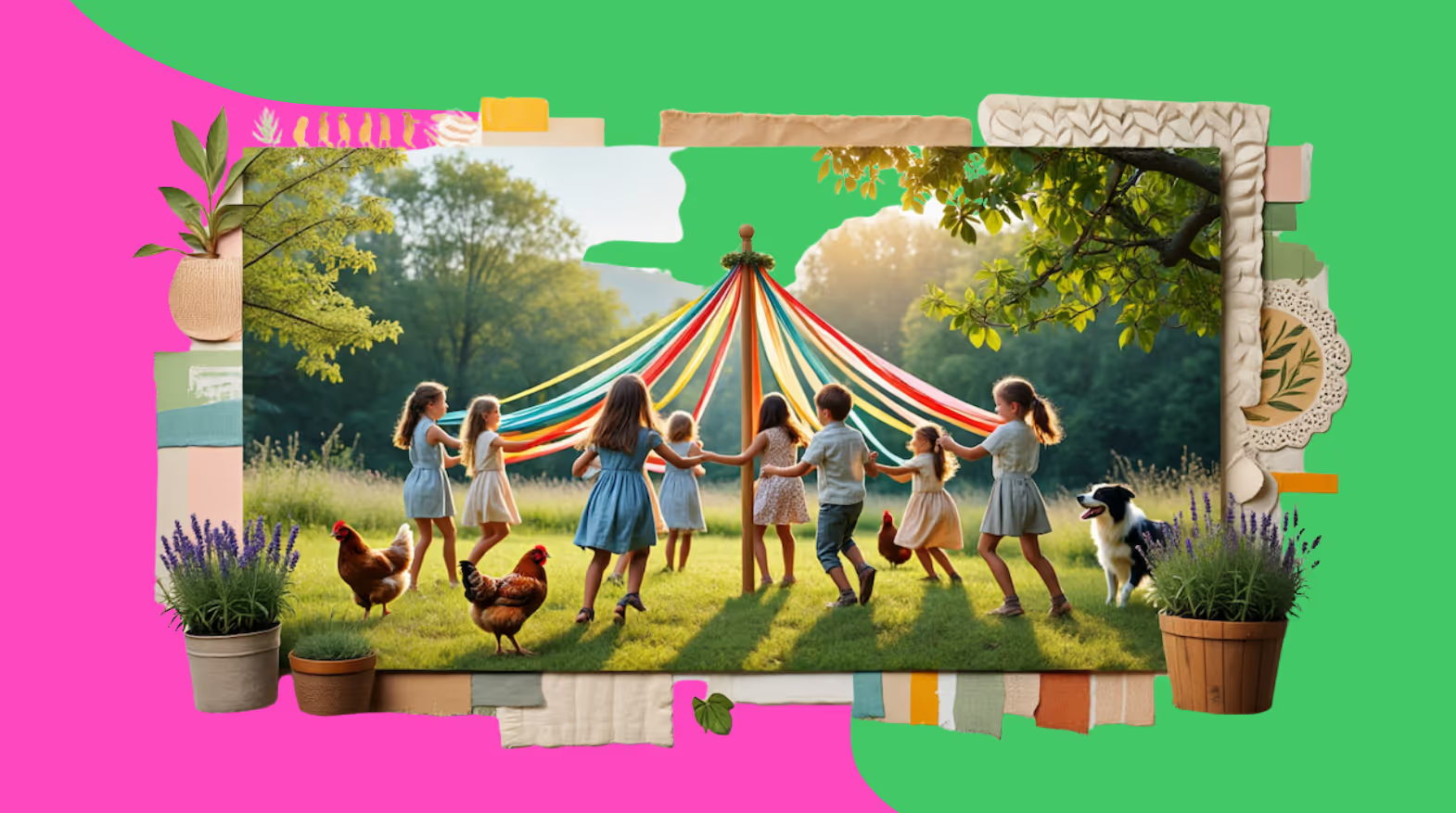
If traditional school just isn’t cutting it for your child, you’re not alone. Maybe your kiddo is anxious every morning, bored in class, or just not thriving in that one-size-fits-all system. Or maybe you’re actively looking for something more creative, more flexible, and more aligned with how kids live and learn today.
Whatever’s driving your search, the right alternative school program could be exactly what your child needs.
There are so many alternative options out there that put kids first, from Montessori and Waldorf to online schools and homeschool-style co-ops.
This guide breaks down what alternative school programs are, the most common types you’ll come across, and how to choose one that fits your child.
What is an alternative school program?
An alternative school program offers a nontraditional approach to education. These programs use different teaching methods, schedules, and environments to better reflect children’s holistic needs, provide more depth in specific areas, or support unique learning requirements. Some focus on flexibility and creativity, while others are more rigorous.
In the past, “alternative” sometimes carried the idea that something was wrong — but today, it simply means different. These programs have evolved to meet a wide range of learning needs and are often better equipped to prepare kids for the modern world.
Some examples of alternative school programs are:
- Full-time online schools
- Montessori or Waldorf programs
- Homeschool-style co-ops
- Small, community-based micro-schools
- Project-based learning models
- Therapeutic or behavioral programs
Whether your child needs more one-on-one attention, a different pace, or a learning style that’s more hands-on or interest-driven, an alternative school program could be the best fit for their educational journey.
Popular alternative school program options
Every child is different, and so is every family. The good news is, today’s alternative programs offer more variety and more possibilities than ever before.
Here are a few of the most well-known options for alternative school programs.
Online school programs
Online school programs offer a full school experience, just without the physical classroom. Instead of rushing out the door each morning, kids learn from home, logging into live classes or working through lessons at their own pace.
What makes them alternative is the flexibility. These programs break away from the one-size-fits-all setup of traditional schools. There’s often more room for creativity, smaller class sizes, and fewer distractions, which can make a huge difference for kids who need a different pace or environment to really shine.
Take bina, for example. It’s a live, global online school for kids ages 4 to 15, with experienced, caring teachers, small groups, a focus on social-emotional learning, and a full daily schedule that mirrors a traditional classroom, just reimagined for the digital world. Kids still interact, collaborate, and build relationships, but they do it all from the comfort (and calm) of home.
A lot of our students continue on with middle school alternative education programs or enter traditional schools. As we’re an accredited international online school, all doors are open once students graduate from bina.
Montessori programs
If you’ve ever seen a Montessori classroom, you’ll notice it feels more like a cozy workshop than a typical school. With Montessori programs, kids aren’t sitting in rows or waiting for instructions. They’re busy pouring, sorting, building, and exploring.
Montessori is an alternative approach built around one big idea: kids learn best when they’re trusted to lead. These programs encourage independence from day one, with hands-on materials and real-world tasks that teach everything from math to motor skills. Think tying shoelaces, measuring rice, and tracing letters — not just memorizing facts.
Classrooms are mixed-age, which means younger kids learn from older ones, and older kids build leadership skills by helping their peers. Teachers step back and act as quiet guides, offering support without micromanaging every move.
Montessori works especially well for kids who like to move at their own pace, need a bit more freedom, or thrive when they’re doing rather than just listening.
Waldorf programs
Instead of screens and worksheets, Waldorf programs get kids painting, baking bread, building forts, or learning through music and movement.
The Waldorf approach puts imagination at the center of learning. It’s less about early academics and more about nurturing creativity, curiosity, and a love of the natural world. Especially in the early years, there’s little to no screen time, and plenty of time spent outdoors.
Storytelling, art, and rhythm are all key parts of the day — and each lesson is designed to meet kids where they are developmentally. Subjects are introduced through rich, engaging narratives, helping children connect emotionally and deeply with what they’re learning.
Waldorf can be a wonderful fit for kids who are sensitive, creative, or need a slower, gentler approach to learning — one that values wonder just as much as knowledge.
Micro-schools and learning pods
Micro-schools and learning pods are all about keeping things small, personal, and flexible. Instead of 25 kids to a classroom, you might have five or six learning together in a shared space, sometimes a home, a community center, or even outdoors.
These setups are usually mixed-age and can be led by a teacher, tutor, or even a rotating group of parents. The learning tends to be hands-on and adaptable, shaped around the group’s needs rather than a rigid curriculum.
Because of their size, micro-schools often feel more like a learning community than a traditional school. There’s more room for creativity, real conversations, and tailored support — which can be a game-changer for kids who become overwhelmed in bigger settings or need a slower, more thoughtful pace.
If your child does better in small groups, wants more voice in their learning, or simply needs a change from the hustle of mainstream school, this might be the right kind of setup.
Charter and magnet schools
Charter and magnet schools are public schools but with a twist.
They’re tuition-free and funded by the government, just like regular public schools, but they have more freedom to design their own curriculum, set their own goals, and follow a unique teaching style or theme. That could mean a focus on science and tech, the arts, languages, or even project-based learning.
Charter schools are independently run and can take a more innovative approach to how and what they teach.
Magnet schools are part of the public school system but offer specialized programs designed to attract students with specific interests or talents.
These schools can be a great fit for families who want something different from the standard public school — but still want structure, certified teachers, and academic benchmarks. They’re also a solid option if you’re not ready to go fully alternative, but you want a better match for your child’s learning style or interests.
Just keep in mind that spots can be limited, and some may require an application or involve a lottery system.
Therapeutic and behavioral programs
Some kids need more than just a different way of learning — they need extra support for what they’re feeling, too.
Therapeutic and behavioral school programs are designed for children who struggle with anxiety, emotional regulation, trauma, or behavioral challenges that make traditional school tough to navigate. These alternative school programs for at-risk students combine academics with mental health support, creating a space where kids feel safe, understood, and better equipped to grow.
Class sizes are usually small, and staff are specially trained to help children manage emotions, build confidence, and re-engage with learning at a pace that works for them. Some programs include therapy, social skills training, or personalized behavior plans alongside the usual subjects.
This kind of environment can be life-changing for kids who’ve been misunderstood or left behind in typical classrooms. They can be a huge relief for parents who just want their child to feel okay again.
Homeschool co-ops
Homeschool co-ops are what happens when homeschooling meets community.
Instead of going it alone, families team up to share the load — and the fun. Parents take turns teaching, bring in tutors, or organize group activities so kids still get to learn with others, go on field trips, and be part of a social circle.
Some co-ops follow a set curriculum, while others are more relaxed and interest-led. Subjects might include everything from science and math to art, drama, or coding, depending on what the families bring to the table.
It’s a flexible option for parents who want more control over their child’s education but still want the benefits of collaboration, group learning, and a built-in sense of community.
If you’re open to homeschooling but not keen on doing all of it solo, a co-op could be the sweet spot.
Project-based learning schools
Instead of working through worksheets or prepping for tests, project-based learning schools have students dive into real-world projects that combine multiple skills. They might design a sustainable garden, create a podcast, or build a model city, learning math, science, writing, and teamwork along the way.
This approach puts curiosity and problem-solving at the center of the classroom. Kids are encouraged to ask questions, work together, and learn by doing, which makes it a great fit for hands-on learners or those who get more out of creating than cramming.
If your child lights up when they’re building, tinkering, or exploring big ideas, project-based learning could give them the freedom to learn in a way that actually sticks.
Which type of program is right for your child?
Choosing the right school program can feel overwhelming, but you don’t need to have all the answers right away. Start with what you do know: your child.
Here are some of the most important things to consider:
Learning style
Does your child learn best by doing, listening, watching, or moving? Some kids thrive with hands-on projects, while others prefer visual lessons or lots of discussions.
Emotional needs
Is school currently a source of stress, anxiety, or frustration? Your child might benefit from a gentler pace, smaller group setting, or a school that focuses on social-emotional support.
Social needs
Does your child need more connection with peers or fewer distractions? Are they more confident in small groups, or do they enjoy the buzz of a busier space?
Family lifestyle
Does your schedule make in-person school tricky? Are you traveling often, juggling health needs, or working remotely? Flexibility might be a big factor in your decision.
Long-term goals
Do you plan to return to traditional school down the line? Or do you want a program that follows a national or international curriculum for consistency?
A different kind of school for a different kind of learner
The word “alternative” can sound like a backup plan. But today, it often means something better. Many of these programs are more in tune with how kids actually learn: with creativity, flexibility, and room to be themselves.
Whether your child needs more support, more freedom, or just a fresh start, there’s likely a school model out there that fits. And it might not look like the classroom you grew up with, but that could be a good thing.
Take bina, for example. It’s not just “online school.” It’s a full-time, structured school day that happens live, with real teachers and real classmates, all from home. Designed for kids ages 4 to 15, bina gives younger learners the kind of connection, routine, and creativity they need to thrive, without the stress of a traditional setup.
In a world where education is evolving, alternative doesn’t mean “less.” It means more choice, more possibility, and a better fit for your child.
Curious whether bina could be the right alternative school program for your child? Let’s talk.
FAQs
Are alternative school programs only for kids with behavioral issues?
Not at all. That’s an outdated idea. While some programs are designed to support kids with emotional or behavioral challenges, many are simply for children who learn differently, need more flexibility, are ready for more advanced topics, or don’t feel like they belong in a traditional school setting.
Will my child fall behind if we leave traditional school?
No, they won’t fall behind. Many alternative elementary, middle school, and high school programs meet (and often exceed) academic standards. The difference is in how kids learn, not what they learn. With the right support, your child may even get ahead.
Do alternative school programs offer the same subjects as regular schools?
Yes, most do, but they might approach them in more creative or hands-on ways. You’ll still see core subjects like math, reading, science, and social studies, just delivered in a way that’s often more engaging or flexible.
Are alternative school programs accredited?
Some are, some aren’t. It depends on the type of program. Accredited online schools like bina follow structured curricula and meet high educational standards, while smaller co-ops or pods might not go through the same process. It’s always a good idea to ask about accreditation, especially if you plan to switch back to a traditional school later on.
Accredited, full-time school for grades K-12
Bring the best of the classroom to your home
See if we're a fit
More to read

The best 8 online accredited homeschool programs in Kentucky
Traditional in-person school is not the right fit for every child. Maybe your kiddo doesn’t like the overwhelm of a crowded public school, or your…

Top Geography Homeschool Curriculum Options and Resources
Compare geography homeschool programs, find helpful resources, and see how to choose the right fit for your child’s learning.

Montessori homeschool curriculum explained: Is it right for your family?
Learn what a Montessori homeschool curriculum looks like, how it works, and whether it’s the right fit for your child’s learning style.