What to look for in an online primary school: The ultimate checklist
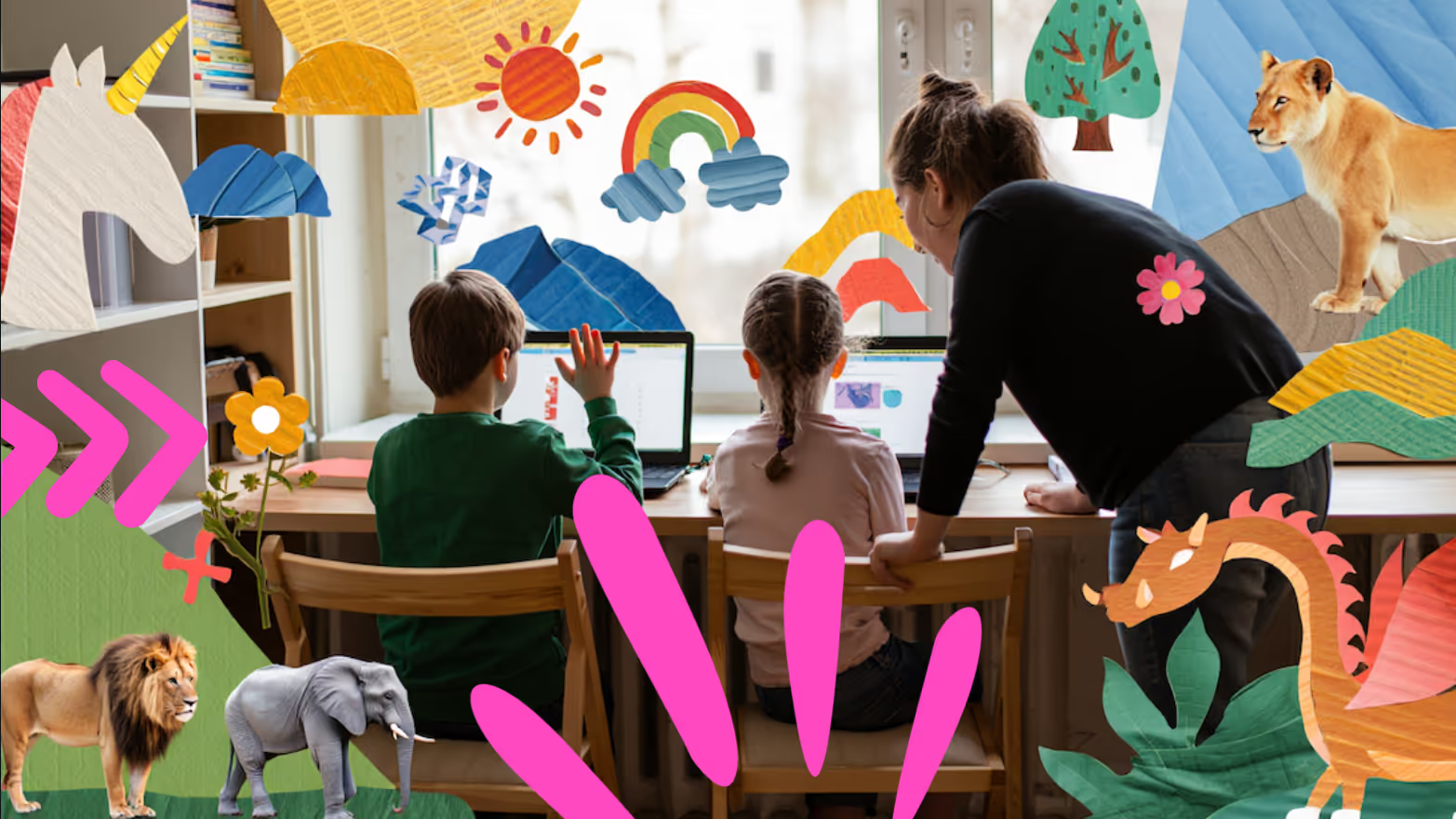
Choosing the right online primary school for your kiddo can feel like one of the biggest, most important decisions you make as a parent. After all, primary school is the first big chapter in their learning journey.
But with countless programs, curricula, and teaching methods, it’s hard not to wonder: “How do I find the right fit for my child?”
That’s exactly why we created this comprehensive checklist. Whether your little one is a budding scientist who loves to ask why, a builder at heart who wants to make the world a better place, or a creative storyteller dreaming up new adventures, use our guide to help you make the right decisions for your family.
The perks of enrolling in online classes for primary school
Online primary education opens a world of possibilities because you can choose the best fit for your kiddo rather than being limited by what’s available locally. You get to follow an educational path that truly works for your lifestyle, no matter where you live. That freedom allows you to balance different schedules, family rhythms, and personal passions into your child’s learning journey.
Additionally, a primary education online can help reduce anxiety. Young kids often feel more relaxed and more engaged in the familiar surroundings of home.
Research suggests that online learning also has positive effects on students' autonomy, motivation, and collaboration skills while providing flexibility that benefits kids. Children not only gain a solid academic foundation like they would in a traditional school, but they also naturally develop important 21st-century skills, including digital literacy, critical thinking, and problem-solving.
The ultimate checklist for finding the right online primary school
Not sure where to start your search? Use this checklist to help you make a confident and informed decision for your little one.
1. Proper accreditation
Accreditation is a golden seal of approval for an online primary school. It ensures that the school meets rigorous standards for educational quality and operational integrity. In other words, you'll be enrolling your kiddo into a legitimate institution that’s held to high academic benchmarks.
Check if the school is recognized by reputable national or international organizations, like Cognia, WASC, or MSA. For extra peace of mind, verify the school’s accreditation directly with the organization’s website, not just the materials provided by the school.
If you plan on switching your child to traditional schools or moving across states or even countries, accreditation will also make future transitions smoother because their education will be recognized.
2. A trusted curriculum
Primary curriculum shapes a child’s knowledge, skills, and love of learning from an early age. So, choosing one that resonates with your kiddo and their learning style makes all the difference.
Your curriculum should be age-appropriate, covering foundational subjects, including language arts, math, science, and social studies. But also look for a curriculum that includes their interests, such as music, foreign languages, or coding, to make primary school online learning more engaging.
It’s important to understand the school’s teaching philosophies. Are lessons project-based, mastery-focused, direct instruction, or a blend? Pick the one that best aligns with your family’s goals and values.
3. Tailored learning
Every kiddo has unique strengths, interests, and needs — look for an online primary school that understands that.
A more tailored online learning experience helps children gain a deeper understanding of what they’re learning and offers specific support when needed. It gives children the opportunity to grow into the best versions of themselves, which builds confidence.
When evaluating schools, ask them:
- How does the school adapt materials or teaching methods for different learners?
- Do teachers provide feedback that is specific, actionable, and personal?
- Beyond just grades, do they offer insights into individual growth and development?
These questions will help you make sure that the education you choose fits your child instead of forcing them to fit into the system.
4. Expert and engaging teachers
Many of us have stories about how a teacher inspired us to discover a new passion or see the world differently. Wouldn’t it be amazing if your kiddo could experience that, too?
Look for certified teachers who also inspire. With online classes for primary schools, teachers need to be skilled at connecting through a screen. They need to bring lessons to life and keep young learners engaged.
How do they build strong connections in a virtual setting? For example, do they use personalized greetings, create breakout rooms for small group collaboration, or carve out time for one-on-one interaction?
Don’t forget to check how easily you can communicate with your child’s teachers. Open communication ensures that you remain an active participant in their learning progress and that needs can be addressed collaboratively.
5. Optimal class sizes
What is the student-to-teacher ratio at the school? Lower ratios generally mean that your kiddo will be getting more individual attention and connection.
Smaller virtual classes allow teachers to get to know each student and understand their specific needs. It creates a learning environment where every child feels heard and seen.
Smaller group sizes have also been proven to improve academic performance, leading to better reading skills for children in their first few years of school.
With fewer distractions, teachers have more time for answering questions and following the curiosity of their students. This ensures every child receives the individual focus needed to master concepts so they can confidently move forward when ready.
6. Interactive learning opportunities
Interactive lessons that transform passive screen time into an immersive experience make learning more engaging and effective. Purposeful play actually helps concepts stick.
Check for interactive elements like virtual labs, educational games, virtual field trips, or hands-on learning opportunities.
Also, look at how your child is encouraged to participate in class. Synchronous schools with live lessons may provide more active participation and socialization compared to asynchronous schools with self-paced modules.
Avenues for creative expression are worth looking into, too. Are there opportunities to express ideas through art, multimedia presentations, or storytelling? These are great outlets for nurturing imagination, critical thinking, and communication skills.
7. Strong student support
It’s important to find an online school that supports your child both academically and emotionally because the primary years shape their perception of learning and group dynamics in the future.
Does the school offer social-emotional learning (SEL) to help your kiddo develop self-awareness and empathy? SEL is crucial for holistic development and helping kids grow into well-rounded adults.
Are there proactive check-ins to check progress and well-being? This shows that the school genuinely cares about every child’s success. Is there academic guidance, such as tutoring or academic advisors, to help with tricky subjects? Your kiddo should always be able to get the right help at the right time.
Don’t forget technical assistance. Since learning happens virtually, a dedicated support team should be ready to solve any hiccups.
8. Meaningful social connection
Beyond academics, primary school is a time for building friendships, learning teamwork, and developing important social skills. Social connection is fundamental to growth.
Dr. Eric Storch, a psychologist at Baylor College of Medicine, explains that friendships and peer support are incredibly vital for nurturing a strong sense of self. As he puts it, “Friends not only provide emotional support but also give feedback that, together with other important figures, helps shape the person you become.”
Many online schools provide opportunities for social interaction through collaborative group projects, class discussions, and games. Some even offer virtual clubs, online events, extracurricular activities, or in-person meet-ups.
It's also worth exploring international online elementary school options. A global school creates a uniquely inclusive community that can help children develop a global perspective.
Tips for getting started with online primary school
Get your kiddo primary school-ready with these tips:
Designate a learning space
A dedicated spot for schoolwork can help your kiddo focus and minimize distractions. This space will signal it’s time to learn and transition into a focused mindset.
The space doesn’t have to be a big or separate room. A simple desk and chair with bright lighting can put them in the learning mood. To make it extra special for your little one, you can add some personal items like a drawing or a stuffed toy.
Build daily routines
Soothe those first-day jitters with routines. Daily routines provide consistency and predictability, helping children relax and build confidence. When your kiddo knows what to expect each day, they can start practicing time management and independence.
Begin online school around the same time each day, just like you would at a traditional school. Create a familiar rhythm that should also include short breaks, snacks, and time to play. It can really help to make a simple, colorful schedule for them to see and follow.
Be your kiddo’s learning buddy
Even with teachers leading online lessons, your kiddo could still benefit from your active involvement. Your support offers assurance, especially if your child is feeling nervous about a new online environment.
Support could look like encouraging them to ask a question, celebrating little wins, or empowering them to manage more tasks independently over time. You’ll see the best results when teachers work together with parents to create a positive learning environment.
Why choose bina for your kiddo’s online primary education?
At bina, we've thoughtfully designed an online environment where every child is seen, heard, and empowered to learn.
Precision education
bina’s educational approach is rooted in precision education, striking a balance between standardization and personalization.
Our teachers gather and analyze data on our students’ progress and look for patterns to understand when and how each child learns best. Then, we’re able to create personalized micro-learning groups of up to eight students.
Small class sizes help us ensure that every child’s learning needs are met. Teachers give timely, personal feedback and adjust online courses based on what our students need every day.
Engaging curriculum and holistic development
Our transnational curriculum combines the best of many worlds — UK standards, US Common Core, International Baccalaureate, and the Australian curriculum.
Our kids gain a solid foundation in math, language arts, sciences, and social studies through project-based learning. Students immerse themselves in thematic biomes where they get to explore subjects interconnectedly. At the end of each biome, they are challenged to create a PBL project tied to the UN sustainability goals. So, our kiddos connect what they’re learning to the real world.
Social-emotional learning is also a big part of bina. Students learn to regulate big emotions, build meaningful relationships, empathize, and navigate tricky decisions or conflicts through SEL worksheets and exercises. bina kids leave with a robust SEL toolkit that they carry with them into the future.
International accreditation
Accredited by Cognia, bina ensures your kiddo is receiving a consistent, high-quality education.
This means smoother future transitions into high school, whether they continue with online school or attend in person. With international accreditation, your child won't need to redo coursework or prove their academic standing. Rest assured knowing your kiddo’s academic journey is recognized and respected worldwide.
Discover a new approach to primary education at bina
bina is on a mission to redefine education, creating a new way of learning that kids enjoy while preparing them for the future with digital skills, social-emotional learning, and a global perspective. Explore more about our school to see if we’re a good fit for your family!
Accredited, full-time school for grades K-12
Bring the best of the classroom to your home
See if we're a fit
More to read

The best online middle schools in 2026 and how they’re transforming education
Considering an alternative to public, in-person middle school? Learn about the best online middle school options available for your kiddo in 2026.

Alternative school program options for every kind of learner
Explore alternative school programs like Montessori, Waldorf, online schools, and more. Find the right fit for your child’s needs and learning style.

Structured learning for kids: The ultimate guide to your options
Learn what structured learning means, when and how it benefits your kiddo, and what a structured learning setup can feel like.