Learning is a wobble: 7 ways AI is changing how kids learn to think
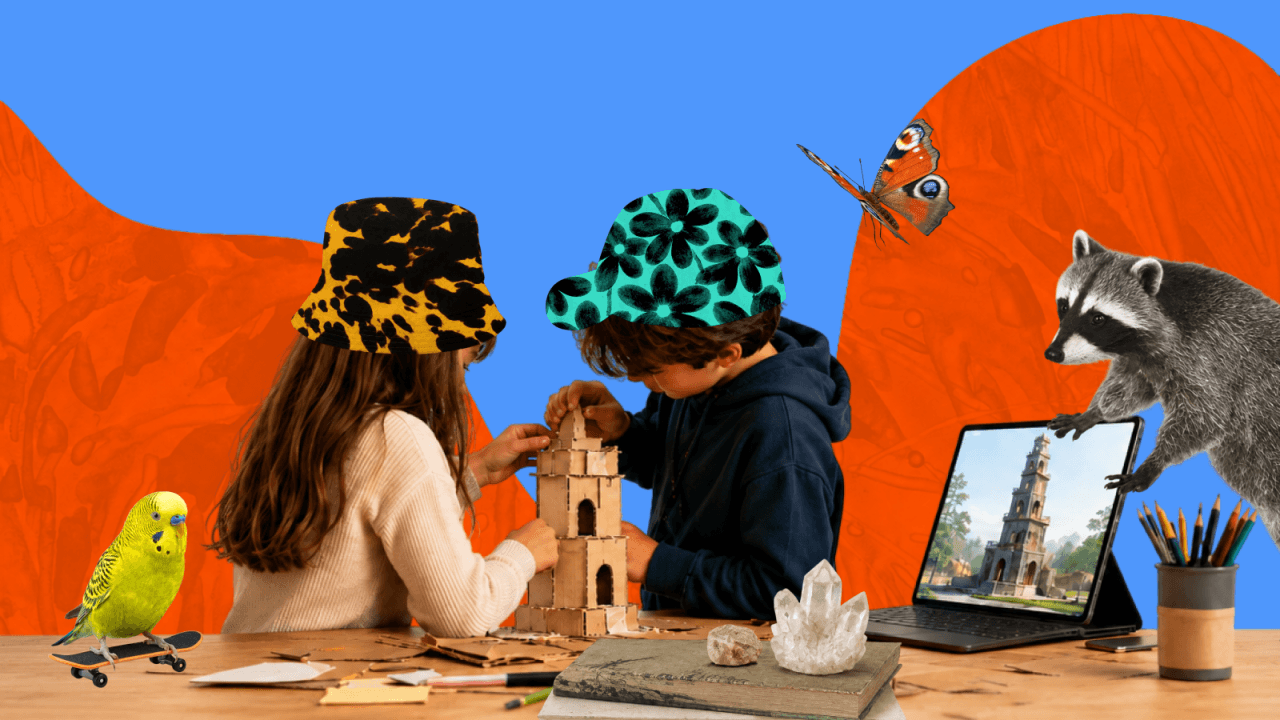

Seven AI risks to a young learner's mind (and a suggestion for design approach to each).
Before asking you, their friends, or their teachers, children turn to their devices. They finish tasks quickly, a habit from growing up in a world that values speed. The devices answer within two seconds, give detailed responses, and never say "Great question, let's find out together." Kids are smart and tired of canned phrases.
I run a global school, and conscientious use of AI excites me. We build with it every day, and from where we're cooking, it's clear it will do more for education than anything since the printing press.
I pay attention to details. Over the past two years, researchers have recorded what teachers and parents observe at kitchen tables and in classrooms.
In the following 9-ish min read, I'll walk you through seven phenomena that keep me awake at night. They are not inevitable, but design problems we are here to solve:
Key takeaways
- Intellectual mirroring — kids are picking up vocabulary from AI's favorite words, not human variety.
- Digital dependency — a third of teens have chosen an AI companion over a person for something serious.
- The illusion of mastery — AI help feels like learning, but doesn't stick without producing the work yourself.
- Collaborative intelligence decay — individual work improves, but a group's ideas start sounding the same.
- Reality-prompt confusion — messy real-life problems don't have a "regenerate" button, but kids expect one.
- The knowledge confidence crisis — a confident-sounding answer isn't the same as a correct one, human or AI.
- AI-induced perfectionism — comparing a first draft to instant AI polish teaches kids the wrong lesson.
1. Intellectual mirroring
Intellectual mirroring is the habit of matching another person's communication style, vocabulary, pace of thought, and complexity during a discussion. It builds fast rapport by showing you understand their cognitive wavelength. Now we do it with machines. The idea is simple: machines copy human language, and now people adjust to the language machines generate. Children especially learn language quickly and well.
A research team at the Max Planck Institute for Human Development analyzed over 360,000 YouTube videos and 771,000 podcast episodes from before and after ChatGPT's launch. They observed a significant increase in words favored by the model, such as "delve," "realm," and "adept." In academic talks, for example, "delve" increased by 48% and "adept" by 51% in the 18 months after launch. (The work is still a preprint.)
Adults today formed their linguistic identity before encountering this form of linguistic mirroring. By contrast, a nine-year-old acquires vocabulary in an environment full of machine-generated language. When more and more language a child encounters comes from one statistical register, that register may become their way of expressing themselves. To me, varied voice and authenticity are profoundly human and worth protecting.
2. Digital dependency
Digital dependency is the need to use tools for answers, choices, and company, even when it harms sleep, focus, and time with others. The quick, easy answer gives a dopamine reward, training people to depend on AI instead of handling uncertainty or solving problems themselves.
Common Sense Media's national survey of 1,060 teens found a third of AI-companion users have chosen an AI over a person for serious conversations, and younger teens trust AI companions more than older teens do. This means the work in primary and middle school right now is essential.
This trend matches what teachers see: some students struggle to start tasks when AI tools are unavailable. This is more than frustration; it is an inability to begin. Do you notice traits of this in yourself too? Perhaps parts of our thinking are already intertwined with the technologies we use. Our goal is to design learning experiences that foster students' enthusiasm, willingness, and ability to solve problems and complete tasks using only human capacities. Connectivity returns; atrophied thinking does not. Without intentional educational interventions, students' thinking and skill diversity will decline.
3. The illusion of mastery
The illusion of mastery is a false sense of confidence in one's understanding of a skill or concept, even though only passive recognition has been gained. Familiarity can deceive the brain. When people reread notes, watch an expert, or follow a guide, they may think they are competent, and fail to distinguish between recognizing something and producing that knowledge or skill on their own.
This one has the sharpest data. Here is a two-year-old classic many followed: Wharton and Penn researchers ran a randomized controlled trial with nearly 1,000 high school math students in Turkey. Students practicing with a ChatGPT-style assistant scored 48% better on practice problems. Then, on the exam without it, they scored 17% worse than students who never had it. The help felt like learning, but they could not retain it.
Massachusetts Institute of Technology Media Lab may have found the neural signature of the same effect. In a small EEG study of essay writing (54 participants, still awaiting peer review), the ChatGPT group showed the weakest brain connectivity, reported the lowest ownership of their work, and often could not quote their own essay minutes after writing it. The authors call it "cognitive debt".
A fluent explanation feels like understanding but often is not. How we express ourselves matters, and what we express matters as much.
4. Collaborative intelligence decay
Collaborative intelligence decay refers to the slow decline in a group's capacity to think, generate ideas, and solve problems together as individuals substitute human discussion for immediate AI answers. AI outputs are quicker and easier than human brainstorming. Social skills needed to build trust, handle disagreements, and reach consensus deteriorate from lack of practice. Delightfully, the messy nature of collaboration allows brilliance to emerge.
Doshi and Hauser showed that writers with access to AI ideas produced stronger stories individually. Still, the collection converged: AI-assisted stories became measurably more similar to one another. Each person improved, but the group narrowed and gave up on spice.
The idea of a classroom is that it fosters collective intelligence, and oddly, in a way AI models do too. The difference is in scale, and that matters. A cohesive, well-debated idea from a small group of learners maintains uniqueness, unlike massive models offering the highest-likelihood phrase next, inevitably aligned with past decisions.
For us, the current generation of adults, the education we received was intended to produce independent learners. If our aim for this generation is to have the skills and dispositions to build a better world for themselves and those around them, we need to design learning activities that foster diverse and interdependent learners.
Now, with a simple prompt, we all communicate flawlessly, repeating the written culture that accumulated before us, and reproducing its biases (the canon was composed primarily by white and male people). The danger is that our ideas and dreams grow similar.
If every group project starts with the same model's suggestions, built on similar types of thinkers, you get thirty polished versions of one thought. Disagreement, tangents, and the friction of building on someone's half-formed idea are inefficient, and also sharpen original thought.
5. Reality-prompt confusion
Reality-prompt confusion happens when people, especially students who use generative AI a lot, treat messy real-life problems like text prompts that need the right words to fix. AI teaches you to expect neat, quick answers, so you lose patience for the slow, frustrating effort real problems require.
I don't know of a study on this yet; please tell me if you find one! It might show up in classrooms before research papers. Teachers say students treat open-ended situations—like a fight with a friend, a broken project, or a blank page—as if there is a perfect prompt to fix it. They keep changing the input, waiting for a clean answer. Life has no regenerate button. Children need regular, supported experience with messy problems that cannot be simplified: other people, physical things, and their own frustration.
6. Knowledge confidence crisis
Knowledge confidence crisis is a loss of trust about what anyone knows: society doubts institutions and data, while people doubt their own expertise. It happens because of information overload, rapid change, and societal pressure to never admit ignorance (and they wonder why we teach epistemology!).
Microsoft Research and Carnegie Mellon surveyed 319 knowledge workers across 936 firsthand examples of AI use. They found that the more confidence people had in AI, the less critical thinking they applied. The more confidence they had in themselves, the more they scrutinized.
Meanwhile, another Carnegie Mellon study found chatbots stay too confident even when wrong; one model, Gemini, even grew more confident after failing. A machine sounds sure compared to a person whose certainty is still under construction. Our cognitive bias is to listen closely to the confident voice. Grandma's hesitant, hard-earned advice can't compete on polish (even if both hallucinate, one sounds more helpful). The challenge is to practice discerning reality.
Fernandes and her colleagues claim that, to optimize human–AI interaction, users must critically reflect on their own performance, although very little is known about the effect of generative AI systems on users' metacognitive judgments.
They found that higher AI knowledge linked to less accurate self-judgment, meaning those with more technical AI skills were more confident but less precise in judging their own work. People using AI often overestimated their performance, reversing the usual Dunning-Kruger effect: the most AI-skilled users were the most overconfident.
Overconfidence in output, disconnected from the work behind it, has a name: "workslop." Researchers at BetterUp Labs and Stanford's Social Media Lab coined it for "AI generated work content that masquerades as good work, but lacks the substance to meaningfully advance a given task." Like adults, kids fall for polished expression and struggle to discern content quality.
We, and our kids, must practice calling B.S. on lengthy, fluent emptiness, whether humans or machines produce it.
7. AI-induced perfectionism
AI-induced perfectionism is the pressure to match the flawless, polished output of generative AI, raising personal standards to impossible heights and leaving people anxious and dissatisfied with their own work. Instant, algorithmic perfection becomes the benchmark, making raw human drafts feel inadequate before they even begin.
Just to illustrate how problematic perfectionism is, a meta-analysis by Curran and Hill (2019) demonstrated a significant increase in perfectionism over a 27-year period (pre-AI). This occurred across different facets of perfectionism: self-oriented (excessively high personal standards), socially prescribed (perceiving social context to be demanding, that others judge them harshly, and that they are increasingly inclined to display perfection as a means of securing approval), and other-oriented (imposing more demanding and unrealistic standards on others).
While self-oriented perfectionism has been considered by some to be advantageous, evidence shows it to be associated with significantly poorer mental health outcomes, including symptoms of depression, anxiety, and eating disorders (Bills et al., 2023; Callaghan et al., 2024; Lunn et al., 2023; Stackpole et al., 2023).
Our kids now compare their work with a model that never turns in a messy first draft. Unlike the LLM, your child always does, because that is what first drafts are. A young learner who compares their shaky paragraph to instant machine polish may learn the wrong lesson: that the wobble is the problem. The wobble is the learning.
So, what can we do?
The seven shifts outlined above, to me, serve as design challenges for educational experiences and institutions. We continuously sweat to gain more and more awareness of the dangers, and are equipped to harness this miraculous potential.
The Wharton study by Hamsa Bastani shares a design lesson. A second group of students used an AI tutor built with guardrails, teacher input, and one rule: answers are only for the student to generate. Learning damage disappeared, because intelligence on tap is not the cause of learning disruption; the unscaffolded design and easy answers on demand are.
Banning teaches nothing and lasts at best until the end of the lesson. Instead, we design for the world our kids already live in. Each of the seven phenomena above suggests a constraint that boosts the team's creativity and our ability to build fresh and exciting experiences. The following is simple, and you can apply it in your home and classroom too.
To treat mirroring, we fill their days with varied human voices. At least two educators per small, close-knit group, classmates from incredibly different walks of life, varied literature from diverse origins, debates baked in. A child who hears many registers keeps their own.
To handle dependency, we practice vulnerability, intellectual humility, and being present in not-knowing. Problems can take days, questions have no lookup, and adults model "I don't know yet, and it's hard" out loud.
To tackle the illusion of mastery, we ask kids to produce and expose before they polish. Explain it to a peer, teach it back, retrieve it cold. If you can't quote your own essay, you haven't written it yet.
We attend to collaborative decay by designing experiences toward interdependent learners; to complete a task, they must collaborate. That teaches kids healthy intellectual and emotional reliance on others. Brainstorms start with humans and end with humans. AI, never as the first word or the last.
To address reality-prompt confusion, we insist on having the kids in constant contact with experiences that resist optimization. Like clay, code that breaks, a friend who is upset, a plan that fails, a disagreement. We teach that some of the work simply does not pan out, and you cannot undo it—what you can do is learn from it. Emotional regulation in the face of this is called resilience.
We grapple with knowledge confidence by teaching kids to ask every confident voice, human or machine, the same question: how do you know? Certainty is a tone, and evidence is a habit.
And we combat perfectionism by making the wobbly draft an artifact we celebrate. Version one goes on the wall. The polish is homework. The wobble is the learning. We ensure we all enjoy the ride.
Our kids are inevitably developing alongside intelligent machines. This truth involves immense opportunities and risks. Ensuring they understand the tools available to them—what they are, how they are built, the theory behind them, what they are good for, and what they are not—is essential. This is the baseline to raise learners who think independently, work interdependently, express themselves authentically, love and seek diversity, and vulnerably share a wobbly draft as they seek feedback from friends, teachers, and you. Kids who enjoy their own mind, love a challenge, and strive to improve.
Accredited, full-time school for grades K-12
Bring the best of the classroom to your home
See if we're a fit
More to read
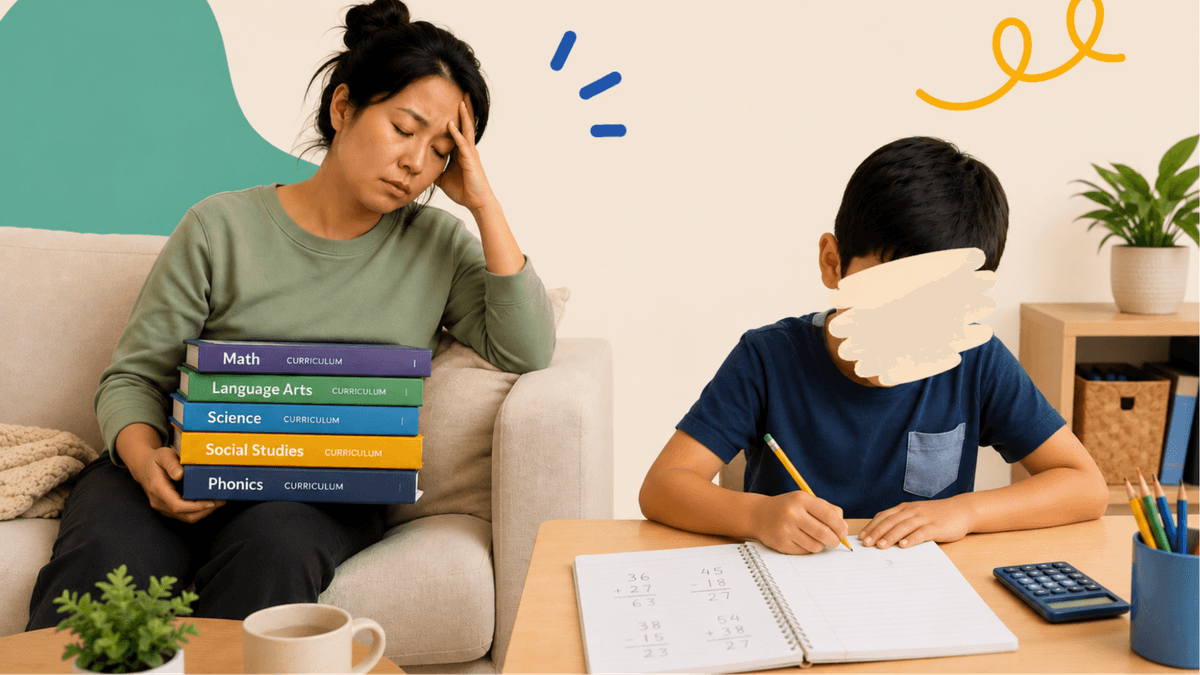

Homeschool burnout: What to do when it feels like too much
Learn how to spot homeschool burnout, understand why it happens, and find practical ways to reduce stress and make learning at home more sustainable.


How using all 8 learning styles keeps kids engaged
Learn how bina teachers use the 8 learning styles to keep your kiddos curious and engaged throughout the virtual school day.


Learning styles for kids: A practical guide for parents
Understand how your child likes to learn to keep them engaged with school. Help them become more adaptable by combining learning styles for kids.