Homeschool burnout: What to do when it feels like too much
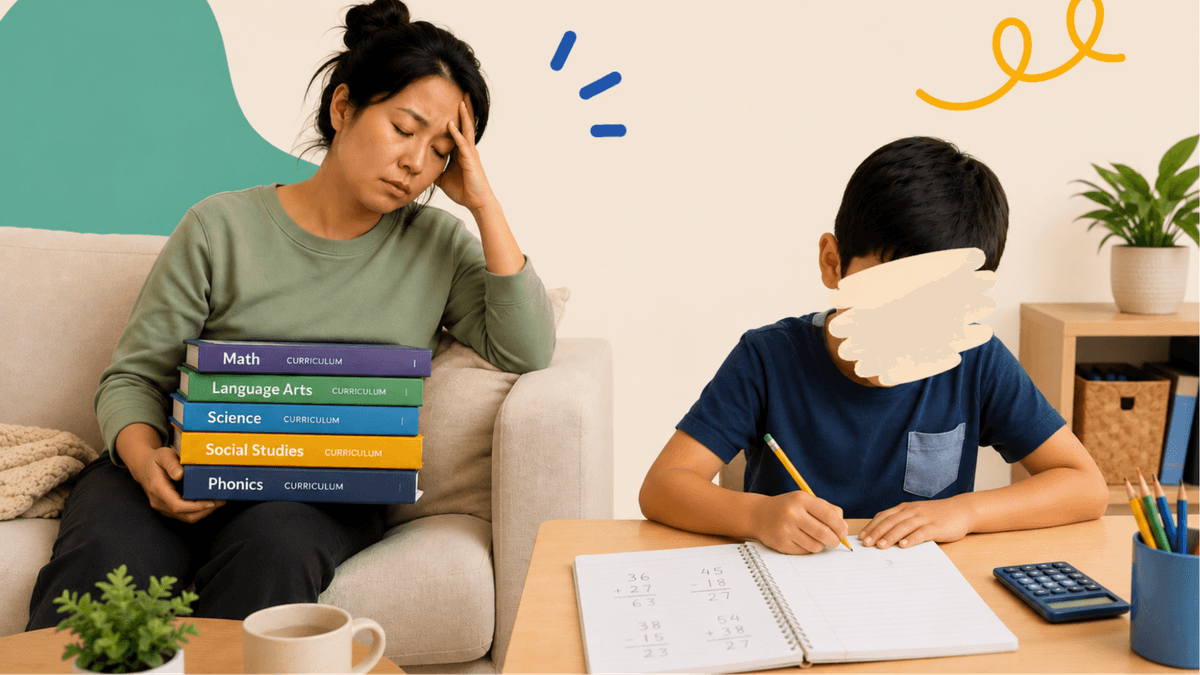

If you’re feeling overwhelmed as a homeschooling mom or dad, you’re not failing. You’re likely burned out from trying to be a whole school in one person.
And you’re not alone. Homeschool burnout is more common than many parents realize. It doesn't mean homeschooling is the wrong choice. It often means you need more support.
Luckily, that support exists in many forms. It might come from a homeschool group, unit modules, or a fully live online school like bina.
Let's take a closer look at the signs of homeschool burnout and explore ways to make your child’s homeschool journey feel sustainable again.
Key takeaways
- Homeschool burnout is very real. Research shows that homeschooling can cause psychological distress for parents if they don’t have enough support.
- Avoiding homeschool burnout starts with recognizing the signs and adopting coping strategies to help make the workload more manageable.
- If you’re seriously burned out or worried you can’t realistically take on the role of teacher, an online school that resonates with your family’s values and vision for your kiddo’s education is likely a better fit.
- bina is an alternative school that’s global, internationally accredited, and built around the idea that the future of education should be both rigorous and joyful. Connect with us to learn more!
Why homeschooling starts to feel overwhelming
Here are the factors that are typically behind homeschool burnout:
You’re not just a parent; you’re the entire system
Many homeschool parents begin with excitement and confidence. Over time, the workload can grow far beyond teaching, making it harder to switch off and recharge.
On any given day, you might be:
- Planning lessons
- Teaching new concepts
- Answering questions
- Managing behavior
- Tracking progress
- Arranging social activities
All while running a household at the same time.
Research in BMC Public Health found that homeschooling can place a heavy load on parents who are already juggling work, family life, and day-to-day responsibilities. Even when families are happy with their decision to homeschool, carrying so many roles at once can feel exhausting.
The pressure to “do it right” never really switches off
Unlike many other jobs, homeschooling doesn’t have a clear endpoint. When you’re responsible for every decision, it can feel hard to switch off, leaving you feeling overwhelmed.
A question about math can pop up during lunch. You might find yourself researching curriculum options after the kids are asleep. A field trip idea turns into another item on your homeschool to-do list instead of a fun family outing.
Like many homeschooling parents, you likely carry a constant sense of responsibility for your child’s learning and progress.
The problem is that, as research in the Education Psychology journal has found, parental anxiety around educational expectations and fear of failure is connected with higher levels of parental burnout. It can also impact kids’ perception of school, causing them to lose some of their enthusiasm for learning if they pick up on their parents’ stress.
When home, school, and life blur into one long day
Traditional schools create natural transitions. The school day starts. The school day ends.
Home education often doesn't work that way.
Without clear boundaries, lessons spill into household tasks, and household tasks interrupt lessons. It quickly becomes hard to tell when you’ve done enough for the day.
As the same BMC Public Health research shows, this blurring of boundaries creates stress, as parents have less downtime for recovery.
Many homeschool parents hit this point and stay quiet
Homeschool burnout usually builds gradually. It might start with irritability, frustration, decision fatigue, or a feeling that you’re constantly behind.
A 2024 study published in BMC Public Health recognizes this feeling. It links burnout directly to the guilt parents feel around the parent they want to be and what that person feels they’re able to do on any given day.
What makes burnout especially difficult is that many parents don’t talk about it, so they end up feeling alone. Feelings of guilt or self-doubt can make it seem like everyone else is coping better than you are.
In reality, many homeschooling parents feel as though they’re carrying a workload that would normally be shared across teachers, schools, and support systems.
The signs you're heading toward burnout
Does any of this ring a bell?
You’re ending the day feeling guilty about what didn't get done. You’re lying in bed thinking about tomorrow's lessons. Small decisions feel harder than they used to. You’re less patient and snap back too quickly. And you’re just tired in a way that never fully goes away.
Homeschool burnout doesn’t always show up in dramatic ways, but the signs tend to set in long before you realize what's happening:
- You’re losing the joy: Research in the Scientific Reports journal links burnout to emotional exhaustion and a lower sense of fulfillment in your parenting role. Activities you used to enjoy with your kiddo can start to feel like another thing to power through.
- Everything feels more frustrating: A recent review in Healthcare found that when parents feel burned out, small setbacks seem bigger than they used to. You may find yourself feeling more irritable or less patient, even during parts of the day you normally enjoy.
- You constantly feel like you should be doing more: Research by Weaver et al. found that mothers experiencing burnout often feel guilty about juggling all their different responsibilities. They worry they’re not meeting their children’s needs. It can leave you feeling as though you’re always behind, even when you’re doing your best.
- Simple decisions feel exhausting: A recent study in PEC Innovation connects burnout with mental fatigue and cognitive weariness. Planning the week, choosing resources, or deciding what's "enough" for the day can start to feel surprisingly draining.
- You're tired, even after resting: Burnout often shows up physically, too. Ongoing exhaustion, low energy, headaches, tension, and disrupted sleep are all common signs that your mind and body need more support.
If you’re nodding along to several of these, it may be time to find a way to make learning feel more manageable and sustainable for both you and your child.
You don’t have to do homeschooling this way
Homeschool burnout often starts with a simple assumption: that you need to do everything yourself. In reality, you have more options for home learning than you realize.
The myth that homeschooling means doing everything yourself
Many parents assume homeschooling only "counts" if they’re planning lessons, teaching every subject, and managing every part of the day themselves.
Before long, many parents find themselves carrying far more than they expected. The day-to-day workload and decision-making become exhausting, even when homeschooling is going well.
But learning from home doesn’t have to mean doing everything alone. Today, you have a range of approaches that bring in extra support while keeping the benefits of learning from home.
Why more families are choosing structured support earlier
More parents are realizing they don’t need to wait until they’re completely exhausted before making a change.
Sometimes, that change is as simple as bringing in a little more support. When teaching, planning, and day-to-day learning no longer rest entirely on your shoulders, there’s more room to breathe. You spend less time managing every detail and more time enjoying the parts of home learning that mattered to you in the first place.
What real home learning support can look like
If homeschool burnout is starting to creep in, the answer isn’t always to stop home learning. Often, it’s about finding the right level of support for your family.
Here are some options to help home learning feel more manageable:
- Simplify what you're already doing: Many parents find relief by focusing on core subjects, building clearer start and end points into the day, and letting go of the pressure to optimize every moment. Good enough is often more sustainable than perfect.
- Share the load: Support can come from a homeschool co-op, online classes, tutors, or live group lessons. You stay involved in your child’s learning, but you’re no longer responsible for every single subject, lesson, and decision.
- Switch to a more supportive model: Some families reach a point where they’d rather spend less time planning lessons and more time enjoying their child. Schools such as bina offer a different way to learn from home. Kiddos learn in small, live online classrooms led by experienced teachers. Learning is personalized, while parents stay closely aligned with their child’s education but without needing to plan, teach, and track progress themselves.
Bringing in support doesn’t take anything away from your child's learning experience. In many cases, it strengthens it.
When you have more space to breathe, your kid benefits too. Learning feels calmer, relationships feel lighter, and the whole experience becomes easier to sustain.
How bina supports both you and your child in your home learning journey
If you’ve reached this point and found yourself thinking, "Yes, that’s exactly how I feel," then put the backpack down for a minute and let bina carry some of it for you.
Learning no longer depends entirely on you
At bina, your child joins live online classes led by experienced educators. Rather than planning and facilitating class time every day, teachers guide learning, answer questions, and give individual feedback every step of the way.
You can also feel confident that your child is receiving a phenomenal education. Our teachers have over 500 years of collective learning experience and continually grow their skill sets with yearly professional development.
A complete curriculum to remove the planning burden
One of the biggest hidden pressures of homeschooling is deciding what to teach next. bina’s curriculum is already mapped out through interdisciplinary, biome-based learning experiences.
When you don’t have to build the learning plan or teach it yourself, you get your evenings and free time back to build a closer connection with your kid.
Personalized learning without all the extra work
Personalized learning shouldn't depend on parents constantly adapting materials and tracking progress.
bina’s precision education approach helps our teachers understand each child’s needs, strengths, and pace, so your kiddo gets a tailored experience without you adding more to your plate.
A caring school community, from home
Learning still happens from home, but your child becomes part of a small global classroom community.
They build relationships, work together on projects, and learn alongside other curious kiddos, creating space for social-emotional development alongside academic progress.
What changes when the pressure lifts
If you’ve been struggling under the weight of managing every part of your kid’s homeschool journey, it’s easy to forget what homeschooling felt like when you first started.
When some of that pressure lifts, both you and your child often feel the difference.
Learning feels lighter
Children are incredibly good at picking up on stress. And when every lesson feels like high stakes, research in the Behavioral Sciences journal shows that this stress affects learning quality and confidence.
But as you find the right support, that pressure eases.
This is when you start to see your kid regain their stride. The resistance starts to fade, and curiosity has more room to grow.
Your role shifts from teacher to guide
When you’re responsible for planning lessons, managing your homeschool schedule, and keeping learning on track, it’s easy to slip into teacher mode all the time.
It can feel like you’re always directing and rarely connecting.
When some of that pressure lifts, there’s more space to simply be mom or dad again.
Instead of saying, "Let’s finish this worksheet," you might find yourself asking, "Tell me more about that project," or "What are you excited to learn next?"
When homeschool routines no longer depend entirely on you, you have more energy for encouragement, curiosity, and genuine connection.
You get some headspace back
When sneaky burnout starts building, it can feel as though homeschooling follows you everywhere.
As some of that pressure lifts, many parents find they have time for themselves again.
That might look like an evening reset instead of late-night lesson planning. It might mean returning to the self-care routines that help you recharge. Some parents turn to exercise, others to a good book.
Whatever it looks like for you, taking care of yourself isn't selfish. Your child doesn’t need a parent chasing the perfect success formula. They need a parent with the energy, patience, and headspace to support them for the long term.
A more sustainable and supportive approach to home learning
If you’ve found yourself thinking, "Yep, that’s me," more than once while reading this, know that you don’t have to keep doing it alone.
At bina, we’re here to support parents who feel this way and become part of your child's learning team. That way, you stay closely connected to your child’s education without needing to be an entire school system.
Your child gets a high-quality, accredited education and a supportive, engaging learning environment. You get the peace of mind you deserve.
If you’re curious what that could look like for your family, start your bina journey today. Connect with us, and we’ll reach out with information and opportunities to talk to our team and explore what learning at bina is all about.
Accredited, full-time school for grades K-12
Bring the best of the classroom to your home
See if we're a fit

More to read

Learning styles for kids: A practical guide for parents
Understand how your child likes to learn to keep them engaged with school. Help them become more adaptable by combining learning styles for kids.



Homeschool mom schedules: Learning from home without burnout
Homeschooling often starts with a clear goal: more flexibility, a calmer learning environment, or an education that fits your child better than a…

Homeschool burnout: a guide for parents doing it all
Learn how to recognize homeschool burnout, why it happens, and how to recover—especially if you're juggling parenting, teaching, and everything else.