7 proven benefits of online school for primary-aged children
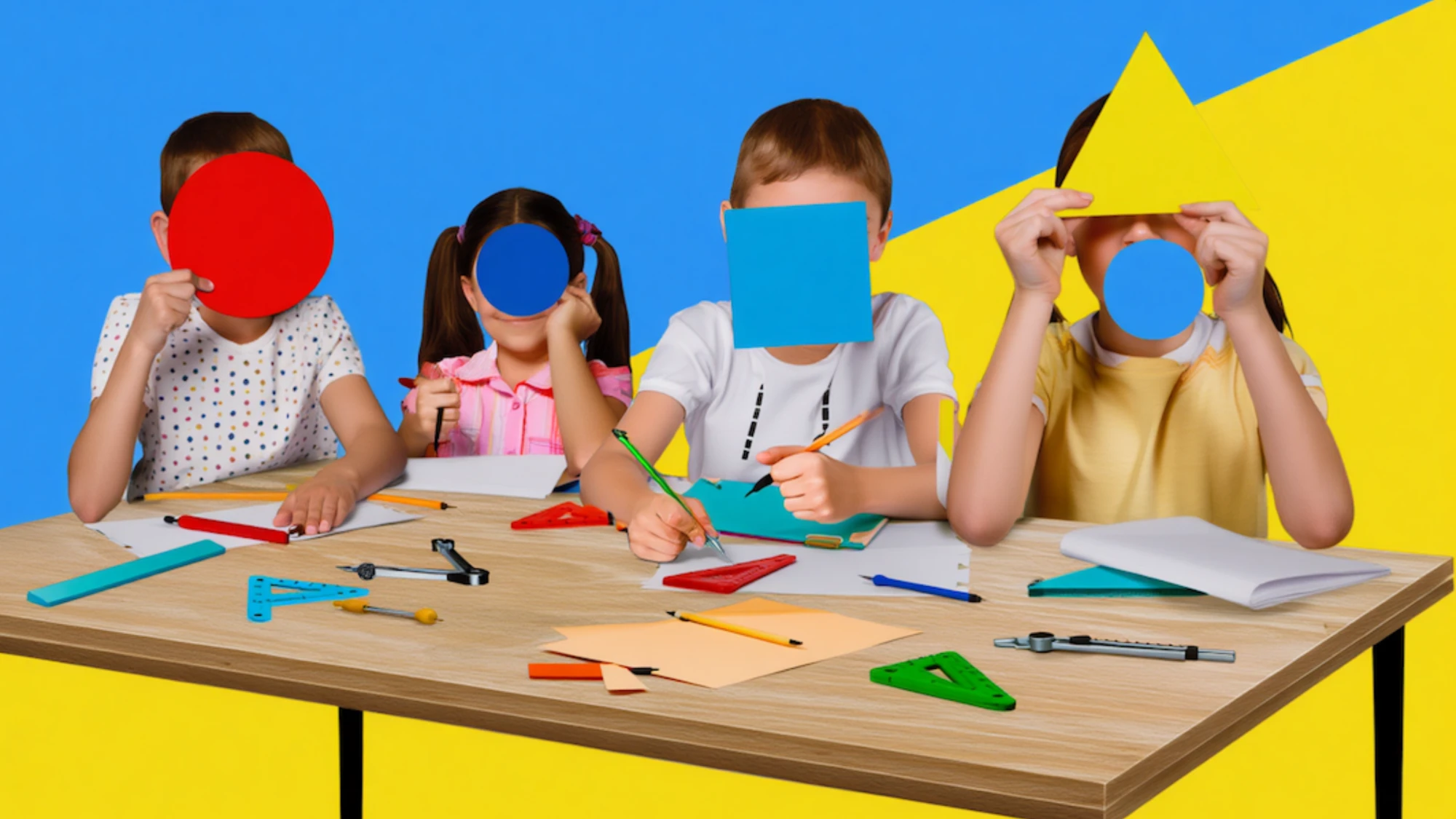
What would primary school look like if we designed it today? Learning would feel more personal, classrooms would reach across borders, and academic growth would go hand in hand with confidence, empathy, and life skills.
Online schools are already putting these ideas into practice through small live classes, global communities, hands-on projects, social-emotional learning, and recognized academic frameworks.
The real value of online school isn’t just convenience anymore. It’s the opportunity to design school differently. These seven online school benefits show what young children can gain from a modern education model built around how they learn, connect, and grow.
Key takeaways
- Live online classes allow teachers to respond to individual progress and support mastery.
- Global classrooms and intentional SEL build cultural fluency and meaningful connections.
- Project-based learning makes online education active, purposeful, and connected to the real world.
- Discover how bina applies these advantages throughout our online primary school.
1. Precision education for individual pace and mastery
Kids rarely reach the same concept with identical knowledge, confidence, or speed. One kiddo might need more examples to make an idea click, while another is ready to tackle the next challenge.
In a traditional, large classroom, it’s harder for teachers to adjust level and pace for different learners and learning styles. A learning gap can snowball and may only become visible in a quiz or progress report.
So why is online school better? Online learning can shorten that feedback loop through precision education. Precision education replaces a one-pace teaching model with a continuous cycle: gather evidence of understanding, identify what each learner needs, respond, and check again. The result is precision education shaped by what each child understands and needs next.
In a live online class, polls, shared whiteboards, discussion boards, and progress tracking give teachers a real-time view into how each child is thinking. Teachers can address issues before a small misunderstanding becomes a larger problem. A 2024 meta-analysis published in Educational Research and Evaluation found that formative assessment had a positive effect on academic achievement.
Small, live virtual classrooms make these insights easier to act on. The Japanese Journal of Educational Research found that smaller classes were associated with stronger language-achievement trajectories from first to fifth grade. With fewer learners, teachers have more time to interpret individual responses, provide feedback, and follow up.
At bina, our educators use insights to form micro-learning groups based on children’s skills, knowledge, and disposition. They guide each kiddo toward shared academic standards while adapting the journey to what they need next.
2. Global classrooms that build cultural fluency
Learning doesn’t have to stay within four walls. Online schooling removes geographical boundaries, giving children the opportunity to learn alongside classmates whose culture, traditions, and everyday lives differ from their own.
Cultural fluency becomes something children practice, not simply study. Imagine a class designing a greener city together. One child might describe travelling everywhere by car, while another shares what daily life looks like in a walkable community with extensive public transport.
To develop a shared plan, they have to explain their thinking, ask thoughtful questions, navigate different perspectives, and consider how local circumstances shape people’s choices. These interactions build the empathy and communication skills young global citizens need. Instead of only learning about the world, children learn with peers who experience it differently.
A study published in the Journal of Online Learning Research examined how K–5 teachers used live video calls to connect their classes with children in other countries. Teachers reported that the exchanges strengthened communication and helped students explore cultural similarities and differences through direct conversation. For younger children, these learning experiences turn cultural differences into opportunities for curiosity and connection.
Learning at bina means having these opportunities every single day. By connecting with classmates from more than 40 countries through live discussions, group projects, and interactive activities, our kiddos build the confidence, awareness, and empathy to connect across cultures.
3. Greater psychological safety for confident learning
It takes confidence to raise a hand without knowing whether the answer is right. Psychological safety empowers children to ask questions, admit confusion, and make mistakes without fear.
But that safety can be harder to achieve in a large, busy classroom. Noise, crowded spaces, rapid transitions, and difficult playground dynamics can make it difficult for kids to concentrate or participate, especially for autistic children and those with sensory-processing differences.
A 2026 study published in the International Journal of Inclusive Education identified noise, crowding, changing routines, and limited support as sources of stress and anxiety for autistic students in mainstream UK schools. Online learning can reduce some of these pressures.
Families can create a familiar, predictable learning space at home. Kids still interact in live online courses, but within smaller, more structured groups. Teachers can offer different ways to participate. A hesitant kiddo might begin by responding in the chat, progress to paired work, and join a group discussion as their confidence grows.
Feeling secure and connected at school also plays an important role in academic progress. A study published in Frontiers in Psychology found that feeling accepted, included, respected, and supported at school contributes to later reading and mathematics achievement.
Helping every kiddo feel seen and supported is central to bina. Our kiddos spend each day with the same small group and teacher, building trust over time. SEN-trained educators and a dedicated school psychologist also support children and help teachers respond to different learning needs.
4. Social-emotional learning and essential life skills
A good education is no longer measured only by good grades. Kiddos today need to learn how to manage emotions, communicate their needs, cooperate with others, practice time management, and make responsible decisions.
These social-emotional learning skills develop through practice. A meta-analysis published in Child Development reviewed 424 studies involving more than 575,000 students across 53 countries, and found that students who participated in school-based SEL programs improved their social-emotional skills, behavior, peer relationships, academic performance, and overall school experience.
A live online school builds this practice into everyday learning. Through paired tasks, group discussions, collaborative projects, and virtual clubs, children learn to express their ideas, listen respectfully, navigate disagreements, and work toward shared goals. Online collaboration tools also give children different ways to contribute, whether that’s speaking, writing in the chat, drawing, or responding with visual cues.
For example, SEL and life skills make up 25% of learning in bina’s curriculum. Each day begins with an emotional check-in, so kiddos can recognise and communicate how they feel. Teacher-led digital playgrounds and activities such as virtual Pictionary and puppet shows also encourage creativity, self-expression, and teamwork in a playful digital setting.
Along the way, our students are also building digital literacy, learning to communicate, create, and participate responsibly in our increasingly connected world.
5. Greater flexibility for modern, mobile families
A traditional school anchors education to one location, timetable, and daily commute. For internationally mobile or worldschooling families, a move can disrupt nearly everything at once. Their bedroom, neighbourhood, friendships, teacher, curriculum, and daily routine may all change within weeks.
Educational continuity gives children one less major adjustment to make. A study from Early Childhood Research Quarterly found that children who changed US public schools before kindergarten recorded poorer reading and mathematics performance in second and third grade, missed more school, and reached English proficiency later.
With live, online educational programs, learning becomes portable. Children get to keep familiar teachers, classmates, and routines, even as their surroundings change. Some virtual learning schools offer flexible enrollment, so families can coordinate education with a move rather than having to find a temporary solution until the next academic year.
Location independence expands choices too. Families can choose a school based on its teaching approach, class size, and curriculum rather than a postal code. Without a daily commute, they may also spend less on transport and uniforms while freeing up more time for sleep, morning routines, and extracurricular interests.
While location may be flexible, online learning still provides a clear structure and schedule. At bina, for example, kiddos have four hours of live learning each weekday. Classes run within ET, CET, PT, and APAC regional time groups, giving families a dependable routine that travels with them.
6. Active, project-based learning for deeper engagement
Remote learning today is far from just watching recorded lessons or finishing digital worksheets. In a live online classroom, children interact and participate through digital platforms, polls, shared screens, chats, and group discussions.
Project-based learning takes learning beyond the screen and into the physical world. A child might research local water use online, measure how much water their household uses, design a conservation plan, and present the idea to the class. Virtual tools support research and collaboration, while the physical world becomes a place to observe, test, and create.
A review in Education Sciences traced how technology-supported projects moved students through multiple forms of active learning: researching concepts, exploring simulations, planning in groups, designing and refining products, and presenting solutions. Frontiers in Psychology also concluded that project-based learning significantly improved academic achievement, attitudes toward learning, and critical thinking skills compared with traditional instruction.
These experiences make children active participants and investigators rather than passive learners. bina puts this approach in practice through six-week thematic biomes based on environments such as oceans, deserts, and rainforests. Students complete a project linked to a UN Sustainable Development Goal, applying knowledge from different subjects in one final product. Learning becomes purposeful, practical, and connected to the real world.
7. Recognized standards for academic continuity
One of the most common concerns about online schooling is whether a child’s education will be accepted by the next school. It’s an important question for families planning to return to in-person schooling, move abroad, or prepare for higher education.
Quality online schools use established academic frameworks, such as Cambridge Primary and the U.S. Common Core, to define what children should know and be able to do at each stage. Clear alignment across subjects, learning objectives, and progress helps a receiving school understand where a child is academically.
Reports, assessment results, portfolios, and other records provide evidence of learning, making future transitions to higher education easier. Proper documentation helps new schools place children appropriately and avoid unnecessary repetition or learning gaps.
Accreditation provides another layer of assurance. An independent organization evaluates whether the school meets defined expectations for areas such as teaching, leadership, student support, and improvement. The Accrediting Commission for Schools, WASC, explains that accreditation becomes especially important when a child reaches secondary school because schools set their own policies.
Internationally accredited by Cognia, bina draws its curriculum from Cambridge, UK, U.S., and Australian frameworks. Families can rest assured that their kiddo is building a strong, recognized academic foundation for whatever comes next.
Is online school right for my child?
Online school may be a strong fit if your kiddo:
- Thrives in small groups with individual feedback
- Enjoys live discussion and collaborative projects
- Feels more comfortable learning in a familiar environment
- Needs academic continuity while travelling or relocating
- Has a quiet workspace and high-speed internet
If this sounds like your child, a live online school could offer the perfect balance of structure, connection, and flexibility your family needs.
Choosing an education designed for the future
Every family wants their child to grow into a confident, curious, and capable learner. A thoughtfully designed online school supports that journey through personalized learning, active participation, and global connection. Kiddos gain the knowledge, confidence, and adaptability to thrive wherever the future takes them.
Start your journey with bina to learn more.
FAQs
How do I know if an online school is properly accredited?
A trusted online school should make its accreditation easy to verify. Look for established accrediting bodies such as Cognia, ACS WASC, MSA-CESS, or NEASC and check the accrediting organization’s official directory and confirm that the status covers your kiddo’s school and grade level. Don’t solely rely on an accreditation logo displayed on the school’s website.
Will my child be able to transition back to a traditional school?
Usually yes, though the receiving school decides placement and which secondary credits it will accept. Having detailed reports, assessment results, portfolios, and curriculum records helps the new school understand your child’s progress. With bina, kids can transfer back to a traditional school.
Accreditation can also support transitions throughout a child’s academic career by providing independent assurance of the school’s quality and standards. But because requirements vary, always ask the receiving school before transferring.
Is online school more affordable?
Online options range from tuition-free public or self-paced courses to full-time online classes with live teaching. A self-paced learning program may cost less than a live school with small classes, but the two provide very different online learning experiences.
It’s important to compare the total cost, including tuition, technology, course materials, and extracurricular activities. Then consider potential savings on commuting, uniforms, relocation, and other related expenses. The best-value option is not necessarily the cheapest, but the one that supports your kiddo’s needs.
Accredited, full-time school for grades K-12
Bring the best of the classroom to your home
See if we're a fit
More to read
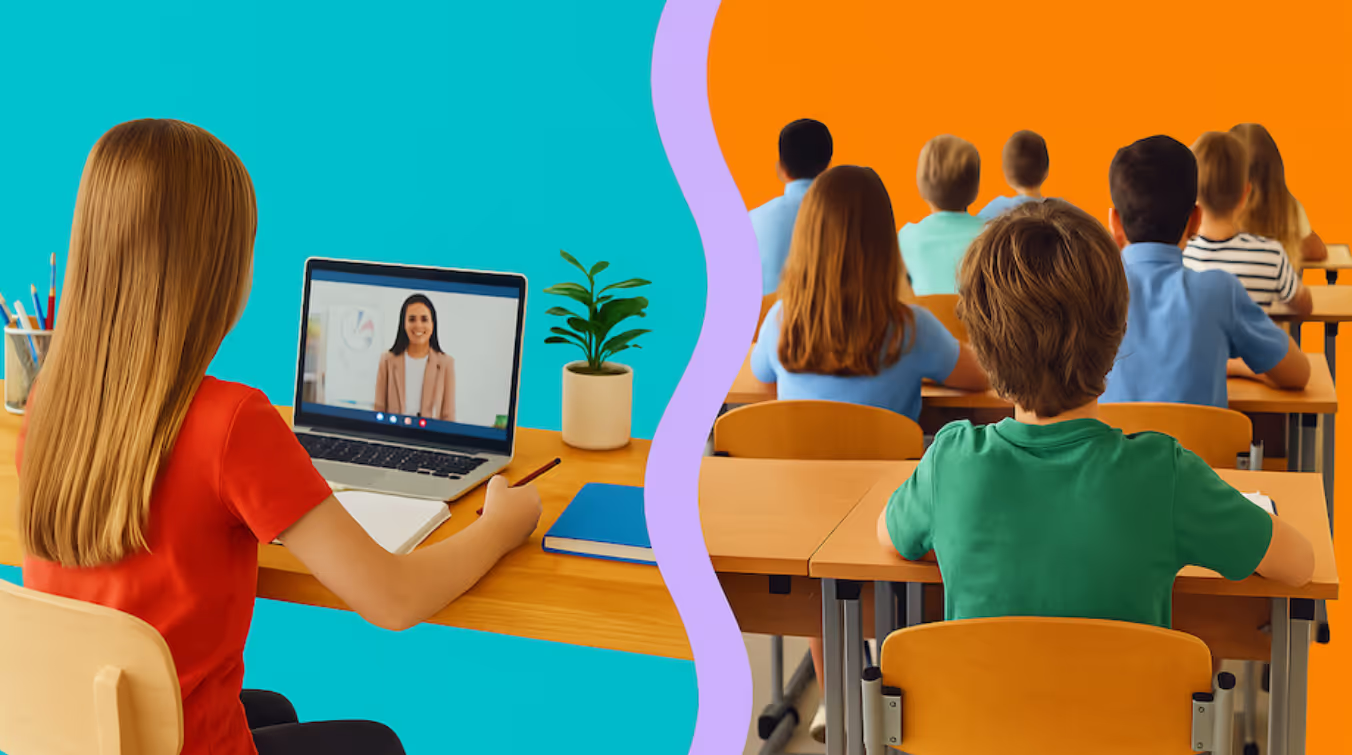
Online school vs. public school: Which is best for your child?
Learn how online school compares to public school regarding curriculum, flexibility, cost, and support. See why online learning may be the better fit.

Why an ADHD online school may be a good fit for your kiddo
Learn how an ADHD online school may support focus, flexibility, and individualized learning, and find out how you can help your kiddo thrive.
The myth of learning styles and what truly works in a modern school
Explore why the popular learning‑styles theory is considered outdated, and discover how modern, evidence‑based methods like personalized and project‑based learning at bina offer real results.