Unschooling vs. homeschooling: How to choose the perfect fit
More and more families are questioning what education has to look like and whether the traditional path still fits their child’s needs. As a result, terms like unschooling and homeschooling are popping up in dinner conversations, late-night Google searches, and parenting forums around the world.
But what’s the real difference? And what if neither feels quite right?
In this article, we walk through what each option really looks like, plus a third path that offers structure and flexibility, personal support, and the international credentials your family might want.
What is unschooling?
Unschooling is a child-led learning approach that puts natural curiosity before curriculum. The term was coined by educator John Holt in the 1970s, after years of observing how children learn best: through real-life experiences, not rigid instruction. Holt believed that children are natural learners and that trust, not control, is the key to helping them grow.
Unlike traditional homeschooling, the unschooling method doesn’t rely on schedules, textbooks, or formal lesson plans. Instead, learning unfolds through daily life. A child might fall in love with ancient Egypt after watching a documentary, then spend the week building pyramids, reading picture books, and exploring timelines. Baking becomes math. A nature walk turns into science. And reading a comic book can be the gateway to storytelling, history, or art.
Parents don’t disappear in this model. But they shift into the role of facilitator, asking good questions, offering resources, and helping their child reflect on what they’re learning. The child leads the way. The parent holds the space.
What works well
Families often turn to unschooling because it honors their child’s natural interests and energy. There’s no pressure to keep up with grade levels or follow a fixed script. Neurodivergent learners especially tend to thrive here, where pacing and focus are fully personalized. Many parents see their kids become more confident, more self-aware, and more joyful — simply because they’re trusted to take ownership of their learning.
The unschooling approach also offers unlimited choice. Whether a family travels often, follows a non-traditional schedule, or simply wants slower, more connected days, unschooling invites learning into everyday life.
What’s challenging
Still, unschooling requires a lot of trust and a high level of involvement. Without benchmarks or assessments, it can be hard to know if your child is progressing in core areas like math or writing. For some families, the open-endedness feels freeing. For others, it’s exhausting. And because unschooling is a form of homeschooling and it’s not accredited, the lack of structure can make it harder to meet national requirements or transition back into traditional schooling systems.
For families considering the unschooling approach, the appeal is clear: freedom and a deep belief in the child. But it also comes with big responsibilities, especially when you're the one designing the path forward.
What is homeschooling?
Homeschooling is a parent-led approach to education that happens outside the traditional public school system. Unlike unschooling, which is fully child-led learning, homeschooling usually follows a structured curriculum or at least a clear plan. But the beauty of homeschooling is that there’s no one way to do it. Some families use boxed curricula. Others mix and match resources from books, online resources, or local programs. Some follow a philosophy like Charlotte Mason, which involves cultivating good habits and using narratives and stories to learn, or classical education, which is rooted in logic, reasoning, and language. Others build something uniquely their own.
The common thread is this: a parent or caregiver is in charge of shaping the learning experience.
Homeschooling can be highly organized or gently flexible. Many families create a daily schedule that includes reading, writing, math, science, and creative work. Some join co-ops or online groups for certain subjects. Others use online platforms like Khan Academy, library materials, or hands-on projects to teach across disciplines.
Assessment also varies. It might include tests and quizzes, but many homeschooling families rely on projects, portfolios, or observations to track growth. The goal isn’t just to complete worksheets, it’s to make sure learning is meaningful and progressing.
What works well
Traditional homeschooling gives families the ability to customize. A child who excels in one subject can move ahead, while another who needs more time isn’t rushed. Lesson plans can reflect your values, culture, and language. For many families, it’s also a safe space where kiddos feel free to be themselves.
Many parents feel that homeschooling brings them closer to their kids. They get to witness growth firsthand, adapt in real time, and build a rhythm that works for their household.
It’s a deeply relational, hands-on way to learn.
What’s challenging
But that closeness also comes with pressure. Homeschooling means being the planner, the teacher, the guide, the accountability partner, and sometimes all in the same hour. It can be tough to manage while working, caring for other children, or just trying to keep the house running.
Social connection can also take more effort. While co-ops, clubs, and meetups exist, they require time, transportation, and access not always available in every community.
And then there’s the question of expertise. Parents often feel stretched teaching subjects outside their own comfort zones. Science experiments, advanced math, or foreign languages can be intimidating without outside support.
Homeschooling offers freedom and hands-on learning, but it asks a lot in return. For many families, it’s not about whether they can do it. It’s about how long they can keep it up without burning out.
Unschooling vs. homeschooling: How do they compare?
Both homeschooling and unschooling happen outside of traditional school walls. But that’s where the similarities mostly end. The real difference isn’t about worksheets or screen time. It’s about how the day flows, who decides what to learn, and how much support the parent is expected to provide.
In unschooling, learning is led by the child. There’s no fixed schedule or formal plan. A question at breakfast can lead to a deep dive by lunchtime into architecture, insects, astronomy, or all three. The parents’ role is to follow their child’s natural curiosity, offer resources, and create space for exploration without stepping in to steer. Progress isn’t tracked by tests but through conversations, hands-on activities, and lived experience. For some families, it feels like freedom. For others, like walking a tightrope without a net.
Homeschooling, by contrast, offers more structure and often more predictability. The parent acts as the teacher: designing lessons, managing the pace, and making sure goals are met. Some families follow a full curriculum. Others piece things together. But there’s usually a rhythm: subjects, schedules, and assessments to track how things are going. It can feel grounding or demanding, depending on your capacity.
Both paths rely on the parent to be the center of the educational experience. And both ask big things of families: planning, tracking, adjusting, and managing it all without a team of teachers or external accountability.
That’s often where families start to pause. Because no matter how beautiful the philosophy is, the day-to-day experience still has to work. And if neither unschooling nor homeschooling feels like quite the right fit, there’s still another option worth exploring.
What bina offers that you won’t find with homeschooling or unschooling
Many families begin with homeschooling for the flexibility or try unschooling to support their child’s natural interests. But over time, questions often surface:
- How do I know we’re covering enough?
- Am I giving my child what they need both emotionally and academically?
- What happens if we need more support?
That’s when some families begin looking for something in between. Not a rigid system. Not a do-it-yourself plan. But something flexible, supported, and designed to grow with their child.
That’s where a full-time virtual school like bina comes in.
bina is a globally accredited, teacher-led program designed for learners who want the freedom of home-based education, all with the structure and connection of a real school community.
What makes it different?
- Daily live classes are taught by educators who understand both academic progress and emotional well-being.
- Small groups (up to eight learners) so each child is known, supported, and challenged at just the right pace through precision education.
- Built-in social-emotional learning with movement breaks, projects that spark curiosity, and collaboration, so learning is engaging and fulfilling.
- Real-time feedback and personalized check-ins, so parents stay in the loop without being the teacher.
- Global classroom that connects learners from around the world, fostering cultural awareness and connection.
- Accredited curriculum that keeps doors open for future transitions.
- No planning, no guesswork, so parents can focus on supporting their kids without carrying the full weight of teaching.
It’s still learning at home, but with a professional team behind you. For many families, that’s the difference between surviving the school year and seeing their child thrive.
bina doesn’t replace curiosity, creativity, or parent involvement. It simply helps those things flourish in a format that’s also sustainable.
Choosing the right educational path for your family
There’s no one-size-fits-all model for learning. Some kids need space to explore. Some need more guidance. Most need a little bit of both — guidance that supports their natural curiosity and a space that respects who they are.
The “best” path isn’t about choosing the right label. It’s about choosing what feels right for your child, your energy, and your goals as a family.
For some, that might be traditional homeschooling. For others, unschooling. But for many families around the world, a full-time virtual school like bina, where connection, progress, and well-being all matter, is the right fit.
Want to explore whether bina could be the right fit for your family? Book a free consultation. We’d love to learn more about your child and support you in finding the path that fits.
Frequently asked questions
Can homeschooled kids go to college?
Yes. Many homeschooled learners apply using portfolios, GEDs, or alternative transcripts that showcase their work, interests, and growth over time. While they may not follow traditional grading systems, admissions teams often look for curiosity, independence, and evidence of learning. Documenting projects, writing samples, or reflections can make a big difference.
Is homeschooling or unschooling better for my family?
That depends on your values, your schedule, and your learner’s personality. If your child thrives with freedom, self-directed learning, and minimal structure, unschooling might feel like a natural fit. If your family prefers a clear plan, predictable routines, and a sense of progress you can track, traditional homeschooling might work better.
Most families land somewhere in between. The key is finding what supports your child’s growth and what fits into your daily rhythm.
Is homeschooling legal where I live? What about unschooling?
In many countries, yes. However, sometimes, there are restrictions, so be sure to investigate the laws where you live before getting started.
Unschooling can work in some countries, but it can be difficult to maintain the open-ended nature if you’re required to submit lesson plans that follow certain standards and if your child has to prepare for state or national testing.
Do I need to use a formal curriculum?
Not always. Many families use books, online resources, or videos to support learning without following a set program. Others prefer more structure. The key is finding what keeps your child engaged and what feels manageable for you.
Can families switch between homeschooling, unschooling, or virtual school?
Absolutely. Education isn’t static. Families often adjust their approach to education as needs change. Some start with homeschooling and transition into unschooling. Others find they need more structure over time and enroll in an online school like bina.
Accredited, full-time school for grades K-12
Bring the best of the classroom to your home
See if we're a fit
More to read
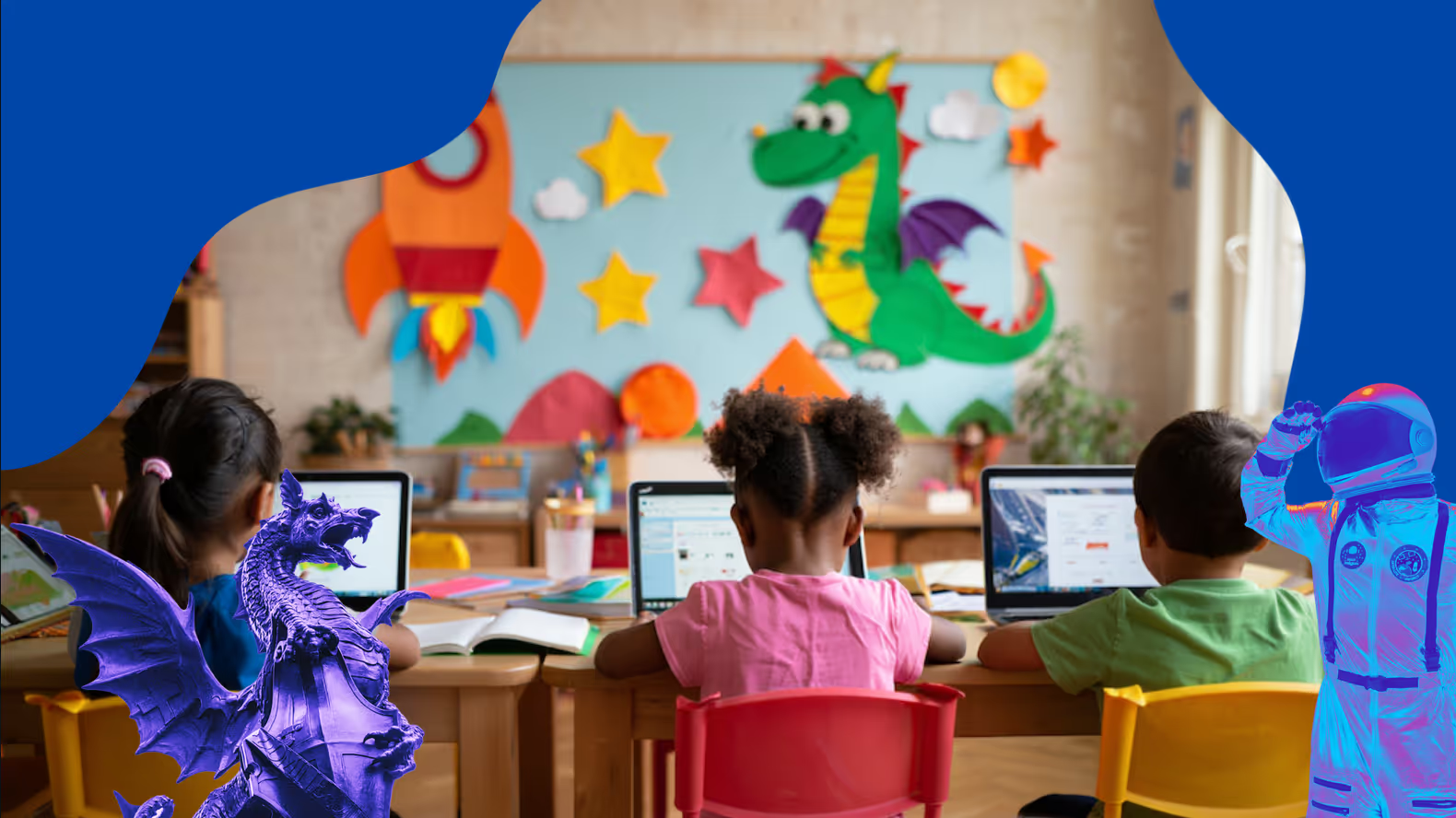
Your guide to the best online elementary schools
Discover the perfect online elementary school where your child can shine! Learn what makes schools stand out and find the right fit for your family.

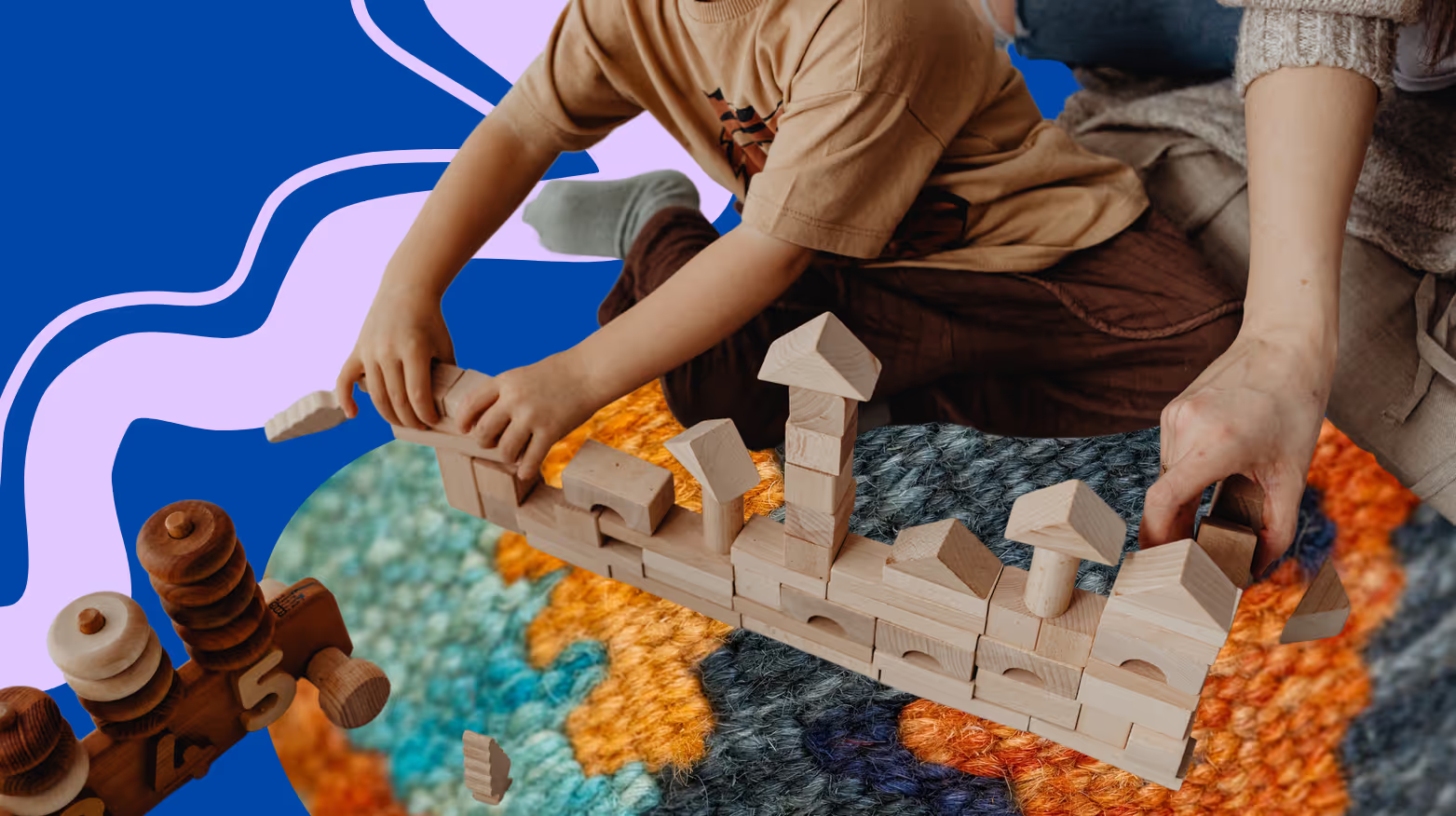
Montessori homeschool curriculum explained: Is it right for your family?
Learn what a Montessori homeschool curriculum looks like, how it works, and whether it’s the right fit for your child’s learning style.
Finding the best homeschool curriculum: A personalized approach
Learn how to choose the best homeschool curriculum for your family. Explore flexible, personalized options that actually work.