The real pros and cons of homeschooling (+ the best alternatives)
Are you concerned that your child won’t get enough attention in a public school classroom? Or maybe your child has already been going to school for a couple of years, and you’re worried they’re not getting the education you want them to have. Either way, you may be toying with the idea of homeschooling your kiddo.
Holding school at home can offer exciting opportunities, like more hands-on learning and the ability to travel without missing school. It can even lead to better academic performance.
But while homeschooling is a great fit for some families, it can also lead to social challenges and stress on parents, which is why many families are turning to more supportive pathways like online learning.
Understanding all the pros and cons of homeschooling can help you decide if it’s the right fit for you and your kiddo or if your family might prefer a different alternative to the traditional classroom experience.
What is homeschooling?
Homeschooling involves teaching your child at home instead of sending them to a traditional school.
It’s a teaching method in which parents (or other caregivers) act as educators and dedicate time to teaching their kids based on their needs and learning preferences.
As such, it offers a lot of flexibility for both parent and child and creates deeper family bonds. But, it also requires significant involvement from the parent since they need to take on the teacher role and are responsible for creating lessons, teaching, and assessing progress.
Still, the time and resources involved can be well worth it if learning at home makes sense for your family. By taking a look at the pros and cons of homeschooling, you’ll be able to decide what’s right for your kiddo.
Pros of homeschooling
From morning routines in pajamas to turning kitchen experiments into science lessons, homeschooling opens up a world of creative learning opportunities. While every family’s journey looks a little different, many discover unexpected freedoms and joy along the way.
Let’s have a look at some of the standout reasons why homeschooling has become such a popular choice for families around the world.
Customized learning experience
You can tailor lessons to meet your children's needs and interests.
For instance, since many kids like hands-on activities, you can include more projects that allow them to create, build, and experiment, such as crafts, science experiments, and even beginner-friendly coding projects that make learning feel more like play.
You can also tailor the learning experience around your kiddo. If your child has special needs, you can implement learning accommodations that would help them, such as extended time on assignments, frequent breaks, or alternative assignments, into their daily routine.
You can also set the pace. Whether your kiddo learns fast or takes it slow, you can meet their needs as long as you follow the homeschool laws and requirements set out by your state or country.
Personal attention
One of the most powerful perks of homeschooling is the gift of one-on-one attention. In traditional classrooms, teachers often have to balance the needs of 20 to 30 students at once, which can make it difficult for individual kids to get the support and attention they need at the right moment.
At home, your child doesn’t have to compete for attention. You get to tune in to their learning style, notice when they’re struggling, and cheer them on when something clicks.
Whether that’s pausing to explain a tricky math problem differently or celebrating a proud reading milestone, your kiddo gets to be seen, heard, and supported — every single day.
Flexible schedules
Flexibility is one of the biggest benefits of homeschooling, as it allows you to fit education around your lifestyle rather than the other way around.
Are you and your kids early birds? You can start lessons early and have more time for outdoor activities in the afternoon. Or maybe you like to take a weekly field trip to local museums, the zoo, farms, or nature centers. When you design the schedule, you don’t have to worry about taking your kiddo out of school to explore the world together.
This homeschooling pro is also useful if your family travels frequently. Whether you move regularly as part of your work or lifestyle, when you learn at home, school moves with you.
Strengthened family bond
Homescooling makes it possible for moms and dads to spend more precious time with their kiddos. This means you’ll get to be there for the little moments and the big ones, whether working on a messy science project at the kitchen table or heading to the zoo for a hands-on biology lesson.
Plus, homeschooling shifts your role from passive observer to active participant. You’re not just watching from the sidelines — you’re in it together. The added time you spend with your kiddo not only makes them feel supported but also increases their well-being.
Fewer distractions
Disruptive classmates can throw off the rhythm of the lesson, and teachers often have to pause to deal with the distracting behavior.
Then, there’s also the issue of noise from crowded classrooms, hallway traffic, and general classroom chatter that can be overstimulating to some students, especially those with ADHD or sensory sensitivities.
Because of these distractions, learning takes longer, and kids’ brains store information in a less useful way, resulting in knowledge that hasn’t had the chance to sink in, making it difficult to apply what’s been learned.
Homeschooling, on the other hand, can be much calmer, causing less anxiety and fear in kids. As such, it provides a safe, quiet learning environment, ideal for retaining more information.
Better academic performance
According to the National Home Education Research Institute, homeschooled students score 15 to 25 percentile points higher than traditional school students.
One of the reasons for this is that homeschooling provides the time and space for students to reflect on meaningful questions, like “Who am I?” and “What do I really want?” As a result, it strengthens their sense of identity and internal motivation, which makes them curious and excited to learn.
Then there’s the personal attention. When lessons are tailored to your child’s needs and interests, it’s easier for them to grasp tricky concepts and dive deeper into subjects they’re passionate about.
Plus, kids who are highly energetic and have physically expressive learning styles can feel free to be themselves when learning at home and away from the pressure to be just like everyone else.
Cons of homeschooling
At first glance, homeschooling might sound perfect. But then you start digging into the challenges and wonder — can I do this on my own? Not only does homeschooling require a lot of effort and time, but it also requires compromises on social interactions. Let’s explore some of the most significant disadvantages of homeschooling.
Time commitment from parents
On top of being a parent and having home responsibilities, you also have to become a teacher.
This doesn't just include teaching your child different subjects. It also includes planning and assessing their work. Not to mention all the additional hours of supervision.
As you can imagine, this adds a lot to your plate and can quickly become overwhelming.
Homeschooling laws and requirements
As mentioned earlier, different states have different laws and requirements regarding homeschooling.
For example, in Colorado, instruction should average four hours per day in writing, reading, speaking, mathematics, civics, history, science, literature, or the US Constitution.
On the other hand, homeschooling in the UK doesn’t have strict time requirements or a specific curriculum. However, parents should provide kids with a “full-time” education.
Regardless of location, recordkeeping is essential since you’ll likely need to provide these records to show what your child has learned. As the parent or guardian, it will be your responsibility to research and follow any requirements.
Limited social interactions
Social interaction among children helps to shape certain skills, such as empathy and self-understanding, helping them build relationships and learn how to interact with others constructively.
When homeschooling, kids have fewer built-in opportunities to interact with peers than those in traditional schools. That’s why it’s so important for parents to be intentional about creating these experiences.
This might include signing children up for extracurriculars like sports or art classes, seeking local or online homeschooling groups, and arranging regular playdates with other kids and parents. Some of these options involve fees and other expenses, which are important to keep in mind when weighing the pros and cons of homeschooling. Signing up kids for extra activities so they can be involved in the community and spend time with peers is an indirect cost of homeschooling that’s easy to overlook.
Burnout for kids and parents
It can be hard to set boundaries between learning time and family time. When your home becomes a school, it’s difficult to “switch off” from school mode.
As a result, kids can feel like they’re always learning, and parents can feel like they’re always teaching, ultimately leading to stress, overwhelm, and burnout.
Potential gaps in expertise
When you homeschool, you are no longer just the parent. You also become the teacher in multiple subjects, including those you’re skilled at and those you may have struggled with during school — hello, algebra, here we meet again.
While this may not be a problem early on, as your child progresses to higher levels, these subjects become more complex, pushing you outside your comfort level.
You may find yourself Googling geometry terms at midnight or fumbling through science labs you’ve never done to make sense of what you need to teach your kid.
This makes it extremely hard to deliver the same depth and accuracy found in accredited schools and will leave gaps in your child’s education, making it harder for them to meet academic benchmarks or transition back into traditional schools later on.
Is homeschooling right for you?
With an understanding of the real pros and cons of homeschooling, what if you decide it’s not the right fit for your family?
Other options are available with more flexibility than traditional schools. Here are some of the best alternatives to homeschooling:
Full-time online school
Learning at an online elementary or primary school allows your child to learn at home from qualified educators.
bina is an online school that offers live instruction in small classes (six to eight students in a class). This gives your child more personalized attention as teachers get to know each student, including their learning styles, needs, and interests.
We also offer precision education, which means our teachers continuously assess what your child knows and understands. We then adjust to meet your kiddo’s unique needs and strengths.
Plus, learning isn’t just about dry theory (which, let’s face it, can be boring). Instead, we bring lessons to life with a strong focus on social-emotional learning, collaboration, and hands-on projects, keeping your kiddo engaged and excited to learn.
With a live online school, parents also don’t have to take on the role of the teacher, so you can focus on your work or other responsibilities, knowing your child is in good hands with an expert teacher.
Unschooling
This child-centered learning approach follows the philosophy that children are inherently curious and want to learn. Rather than learning through structured lessons, children learn through living.
For example, a child who is interested in marine life may visit aquariums and go to the beach to explore tide pools rather than following a standard science textbook.
Notable advocates of unschooling include author and educator John Holt, who is widely considered a pioneer of the unschooling movement. He believed that the best learning happens when it’s driven by a child’s natural interests and real-life experiences.
In essence, parents could follow their kids’ lead and use everyday life, from cooking to walking in nature, as the foundation for their children’s education.
Local private schools with flexible programs
Some private schools offer a unique curriculum to suit students’ needs. These schools cater to different learning styles and usually offer smaller class sizes compared to what you’d see in public schools.
Schools like Acton Academy offer self-directed learning. Additionally, Montessori and Waldorf schools often emphasize hands-on and experiential learning.
Families can also explore microschools (also known as learning pods), where small groups of up to 16 students (of different ages) learn together in a classroom. Microschools are sometimes considered the midway point between traditional and homeschool because class sizes are smaller and learning is more personalized.
Benefits of full-time online learning at bina
With bina, your child can learn from anywhere in the world, and parents get peace of mind knowing their kiddo is receiving an accredited education from expert educators.
- Built for real-life flexibility. Online school makes it easier to give your child a consistent learning experience when traveling.
- Small class sizes. bina has small classes, so all kiddos get plenty of attention and have the opportunity to build relationships with other students.
- Precision education. At bina, we offer precision education. We gather and analyze data and understand when kiddos are most content to craft micro-learning groups and content that matches each student’s learning needs.
- Social-emotional learning and life skills
We build social-emotional learning (SEL) and life skills into everyday learning with activities that help kiddos develop self-awareness, empathy, and resilience.
- Global curriculum, local comfort. bina is internationally accredited; we incorporate curriculum standards from the US, the UK, Canada, and Australia. And with a Learning Success team that looks for ways to support each student, it’s a shared journey, not just a solo mission for parents.
Discover if a global online school is a good fit for your kiddo
If you have doubts about homeschooling but don't want to enroll your child in a traditional school, at-home learning with a full-time online school might be the best fit for your child.
With bina, students experience an immersive, supportive, and exciting learning experience. If you want to learn more about bina, book a call with us. We’d love to show you how our school can perfectly fit you and your family.
Accredited, full-time school for grades K-12
Bring the best of the classroom to your home
See if we're a fit

More to read
Online preschool: Is it right for your child?
Wondering if online preschool is a fit? Learn the pros, cons, and signs your child’s ready, plus what to look for in a great online pre-k program.


What is the best online homeschool curriculum for your child?
Discover the best online homeschool curricula for 2026, from live teacher-led options to self-paced programs. Find the right fit for your family.

Which are the best states for homeschooling in 2026?
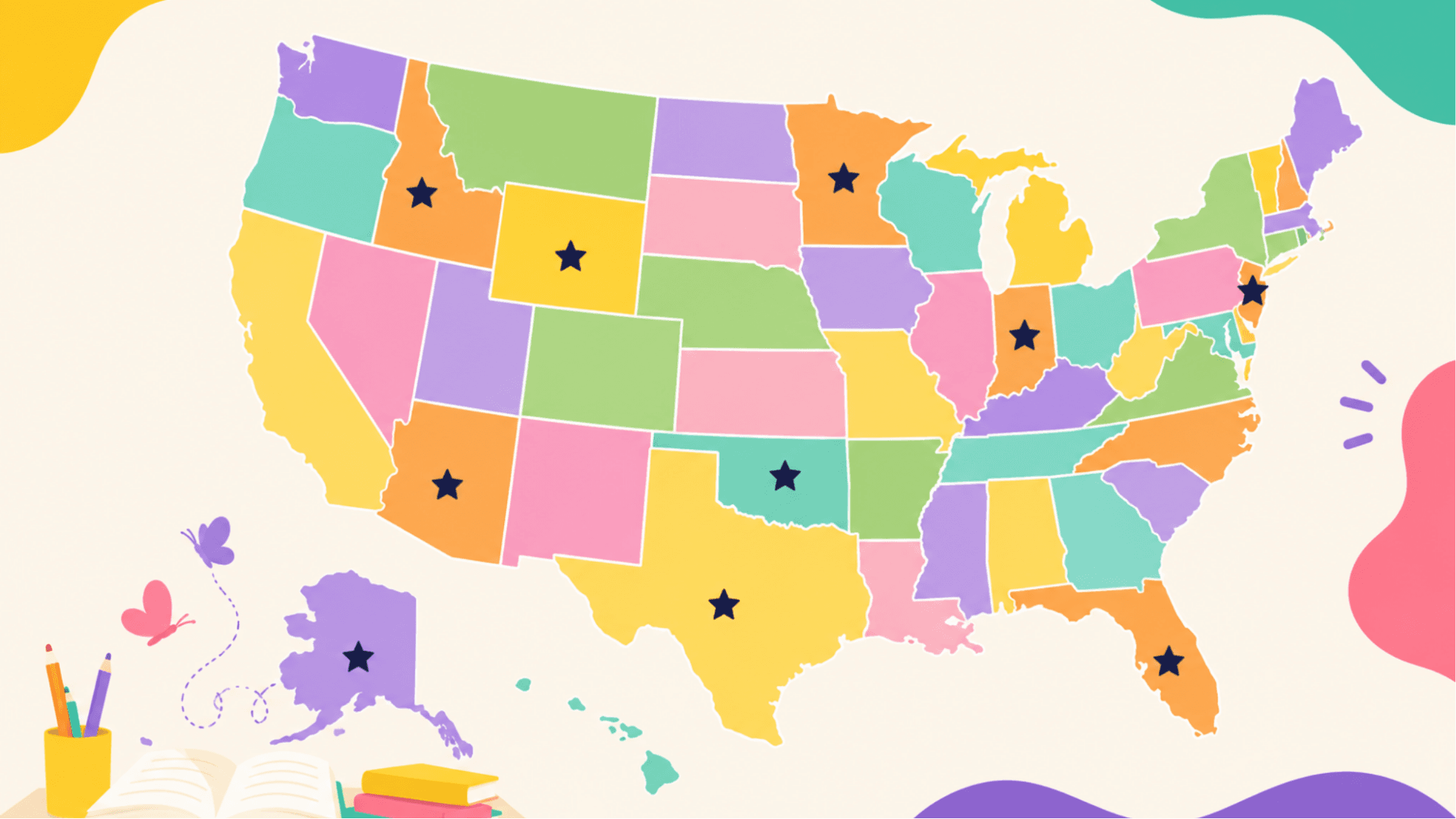
Wondering which are the best states to homeschool in? Explore homeschool laws, funding options like ESAs, and community support across 10 top states.