How to choose the best online homeschool for your elementary-aged kiddo
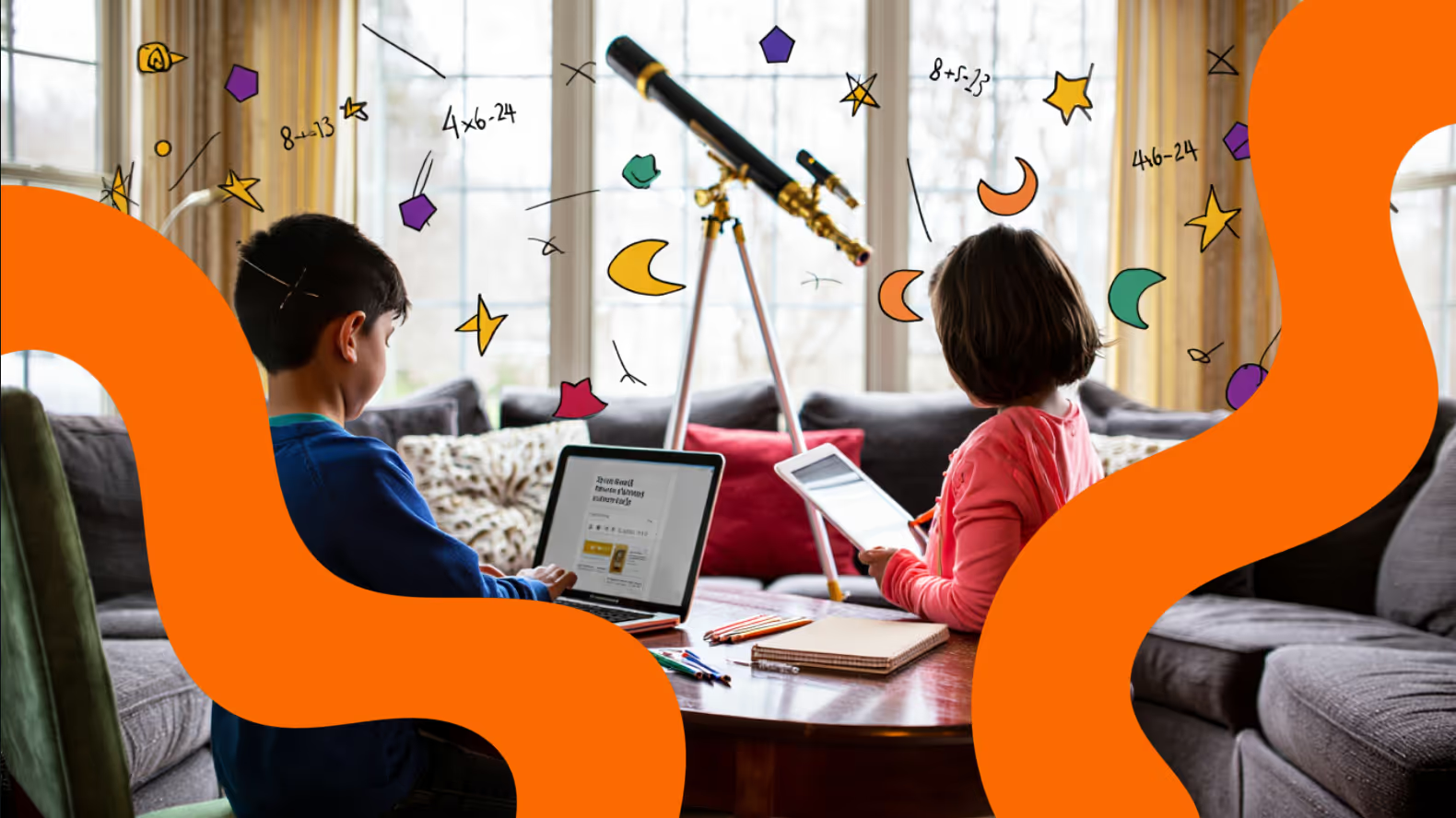
Elementary is an exciting chapter where curiosity grows, foundational skills are built, and a love of learning takes root.
What if your kiddo could embark on this grand adventure from the comfort of your home?
For many families today, online learning is opening up new possibilities. From a more personalized approach to education and greater flexibility to the ability to learn from expert teachers, online programs can create a learning experience that fits your child’s needs.
So, if you're wondering where to begin and how to choose the right online homeschool elementary school for your kid, we're here to help.
What are the benefits of online elementary learning?
Online elementary learning offers some amazing benefits for your kiddo and family:
Curriculum that resonates with your values
One of the most powerful aspects of online learning is the freedom to choose a curriculum and learning approach that resonates with your family’s values.
You get the chance to go beyond academics and focus on holistic development, including the emotional, social, ethical, and physical well-being of your kiddo.
For example, if your family values personal growth and emotional well-being, pick a curriculum that emphasizes social-emotional learning to help your kiddo better understand themself, develop empathy, and build stronger relationships.
Or, if your family cares deeply about specific ideals, such as sustainability or diversity, find an online program that has these principles built into its curriculum.
At bina, for instance, our students create projects that are connected to the UN's sustainability goals to empower children to engage with real-world social and environmental challenges.
Personalized learning journeys
Every kid learns differently. Online learning provides an educational journey that can be more easily tailored to your kid’s style, needs, and pace.
There are a variety of curricula designed to cater to different learning styles. Whether your kid is a visual learner who loves diagrams, an auditory learner who thrives on discussions, or a kinesthetic learner who learns by doing, you'll find something for them.
They can comfortably spend more time on challenging topics and move quickly through familiar ones. Some online education platforms even adjust the experience based on their progress, ensuring learning is always at the right level.
Learning that fits your family's lifestyle
Online elementary school is more adaptable to your family’s routine and needs, so learning can fit into your life, not the other way around.
This adaptability makes online learning a great solution for families that don’t fit into the typical lifestyle. For families who travel often, for instance, online learning becomes a school that goes with you anywhere in the world, so your kiddo can learn wherever you are.
Similarly, for kiddos with intensive extracurricular commitments, online learning offers the freedom to pursue their passions without compromising their academics.
A world of resources at your fingertips
Online learning breaks down geographical barriers — kids are no longer limited by their local area. They can instantly get access to a vast library of online resources from around the globe.
Educational websites, apps, videos, and other tools are just a click away. These digital resources offer a different way for children to explore new topics and deepen their understanding.
For example, instead of just reading about the pyramids of Giza, your kid can take a digital field trip to explore the inside of a pharaoh's tomb.
Developing essential 21st-century skills
The world is changing fast, and education needs to keep up. Online learning helps kids gain the digital literacy skills and technological proficiency needed in the 21st century.
As kids immerse themselves in online platforms, they become comfortable using digital tools for research and creation. They also learn to analyze information from various sources and confidently articulate their ideas in digital media.
Beyond technology, this environment helps children develop critical thinking and problem-solving skills, as they learn to evaluate information and come up with creative solutions.
Different types of online homeschool elementary programs
Once you’ve decided you want to explore an online elementary education for your kid, you still need to figure out what approach to use.
Understanding these different types is the first step in finding the right fit for your kiddo:
Live online schools
Live online schools offer a structured learning environment in the comfort of your own home. They operate like traditional schools in the sense that there is a full curriculum, set schedules, assignments, and regular interaction with teachers and peers. Online courses are in-person and taught by teachers every day.
These schools are typically divided into private and public online schools. The private options often have smaller class sizes, specialized curricula, and a tuition fee. Online public schools are generally tuition-free, have large classes, and adhere to the learning standards of their respective regions.
Asynchronous online schools
With asynchronous online schools, parents guide their child’s learning at home using pre-designed learning materials. Usually, there is instructional support, but the level of support depends on the specific program chosen.
There is also a wide range of teaching methodologies, from classical to Charlotte Mason or eclectic approaches. These options allow you to pick what truly resonates with your family's educational philosophy.
The curriculum comes in various formats, including fully digital, print-based, or a combination of both. Depending on the program's design, it might offer a structured daily routine or more flexible pacing.
Hybrid programs
Hybrid programs blend the structure and expertise found in live online schools with the personalization and flexibility of homeschool programs. Kids benefit from real-time teacher interaction and the freedom to explore topics independently.
Some programs incorporate in-person meetups, co-ops, or access to learning centers to add social connection and a hands-on touch to the online experience. It’s a great choice for families looking for a balanced and adaptable learning environment for their kiddo.
What to ask yourself before choosing an online homeschool elementary school
To help you find the right online elementary program for your kiddo, ask yourself and your family these questions before making a commitment:
Do you want a global or local education for your kid?
Even if your kiddo is just starting their elementary adventure, it’s a good idea to think about their educational journey for the future.
Does your family plan to make international moves or to stay in your current location long-term?
If moving is in your family's future plans, you’ll want to research that specific country's school system and choose online schools that align with those standards to simplify future transitions.
There's a difference between a locally-focused education that emphasizes regional history, geography, and community connections, and a globally-focused education that introduces diverse cultures and broad perspectives from a young age. Understanding your family's preferences can guide you in choosing the perfect learning path.
Does your kid already have a social circle?
Kids need meaningful connections to help them feel seen, build empathy, and learn social skills. So, thinking about friends is a super important part of choosing an online school.
What does your kid’s social circle look like now? And is it fulfilling their need for connection? Evaluate their current social needs and the opportunities they have for interaction outside of school, such as sports, clubs, or neighborhood playdates.
Live online schools offer more built-in social interaction during the school day. Some even offer virtual clubs, collaborative projects, or other ways to connect.
Since asynchronous programs are typically designed for independent learning, you'll want to find other social opportunities for your kiddo to connect with other children.
What kind of learning environment best suits your kid?
There’s no one-size-fits-all answer — you get to explore what truly works best for your child.
A structured daily schedule and direct teacher guidance may help some kids thrive, while others need more independence and flexibility in their learning. But for elementary school students, some level of parent or teacher guidance is necessary for their growth.
Also, consider your kiddo’s learning style and attention span. Think about how they best engage with new ideas. Then, choose methods that support their learning style, whether it’s live video, interactive games, or self-paced modules.
What level of parental involvement are you able and willing to commit to?
Be honest and practical about the time you can dedicate to your kid’s education — and don’t feel guilty if it's not as much as you'd hoped!
Live online schools have teachers who lead classes and structure the day, so they often demand less teaching from parents. Asynchronous online schools usually require more parental involvement to guide kids through lessons and activities.
Do you have teaching experience? Are you comfortable teaching trickier subjects? Sometimes, even if you understand a concept perfectly, it may be hard to explain it to a wide-eyed seven-year-old staring right back at you. It can be easier and more effective to have experts do the teaching if you’re not feeling confident.
If you choose an async online option, you may need to find outside support from online guides, forums, or even tutors if your child needs extra help.
Your online homeschool elementary school checklist
This checklist is here to help you choose an online elementary homeschool that fits perfectly into your family:
1. Curriculum that matches your kid’s learning needs
Every kid learns differently, and quality education is one that matches their needs. So, how does your child learn best? Their specific learning styles can give you a hint.
A suitable online curriculum should resonate with how your child learns and help them stay motivated. So, find programs that adapt to your child's needs, pace, and preferences.
2. Opportunities for social interaction and connection
Even when learning is done at home, having opportunities for social interaction is incredibly important for your child's growth.
Look for features like video conferencing, interactive chat features, or shared online workspaces where kids can collaborate on projects and make new friends. These tools help cultivate a community among students, helping kids feel a sense of belonging, even across distances.
3. Dedicated and expert teacher support
The heart of any great school, online or off, is its teachers. Are the teachers in your choice of school certified in elementary education, highly experienced, and passionate about guiding young learners?
Think about the quality of teacher support. Will your child have one-on-one moments with their teacher? Does the school provide thoughtful, timely feedback on assignments? These small touches can help build your child’s skills and confidence.
Pay attention to the student-to-teacher ratio, too. A smaller class size means more individualized attention, allowing teachers to better connect with your child.
And remember, a great partnership between home and school is key. Schools that offer communication channels to connect with teachers for questions or updates help you stay in the loop.
4. Easy-to-use platform
Finding an intuitive, visually appealing, and age-appropriate platform for elementary students can make a big difference in how they engage and retain information.
An easy-to-use platform reduces frustration and allows your child to focus on learning instead of struggling with tricky buttons. User-friendly should also mean it’s easy for you to use. Look for a parent portal where you can track your child's progress, find assignments, and chat with teachers.
Also, what tech is needed for individual courses — a computer or iPad, internet connection, and any specific operating systems? Make sure your family can meet the requirements.
5. Balanced cost and value
There are so many online homeschool options available, ranging from tuition-free to private tuition, so it's smart to plan your budget.
What’s included in the tuition? Some options may seem budget-friendly at first, but once you factor in the additional costs, like registration fees, supplemental materials, and extracurricular activities, the total can add up quickly.
Your best bet is to look for reviews and testimonials from other families. Are teachers able to offer personalized attention, or are they responsible for dozens (or, in some cases, hundreds) of students? Do kids seem happy and interested in learning?
Other families’ experiences can offer insights into a program's true value and help you make an informed choice. And take advantage of any trials or demos so your kid can try out firsthand!
6. Proper accreditation
Proper accreditation is a sign of the school's legitimacy, teacher quality, and educational rigor. It means the school meets recognized quality standards, and credits or diplomas are more likely to be accepted by other institutions.
This is especially important if your kid switches to a traditional school later on — it makes the educational transition much, much easier.
Imagine that your child is learning brilliantly at an advanced grade level in a non-accredited elementary program, but when they enroll in a traditional high school, the credits are non-transferable. So, they’re not placed in the right classes, and they become frustrated, bored, and unfocused in school courses.
To avoid tricky situations like this, choose an accredited school to ensure your kiddo's hard work is always recognized and their next educational adventure starts on the right foot.
An inspiring elementary education starts with bina
As you explore all the possibilities online elementary education has to offer, we’d love to introduce you to bina.
Our internationally accredited online elementary school blends precision education with a global perspective to inspire young minds. An education at bina means tailored learning, a focus on social-emotional skills, and a connection to the real world through project-based learning.
Wondering if we might be a good fit? Find out now!
Accredited, full-time school for grades K-12
Bring the best of the classroom to your home
See if we're a fit

More to read

What’s the best (and most fun) online kindergarten homeschool program?
Compare six online kindergarten homeschool programs, from live classes to self-paced tools, and find the right fit for your kiddo.

10 best online homeschool programs in 2026
Looking for the best online homeschool programs? We compare 10 top-rated options — from fully live schools to self-paced curricula — to help you find the right fit for your child.


The best 7 online accredited homeschool programs in Georgia
You're sold on the idea of having your kiddo learn at home for the flexibility, the personalization, and the fact that your child doesn't have to fit a…
