My child hates school: What it means, and what to do next
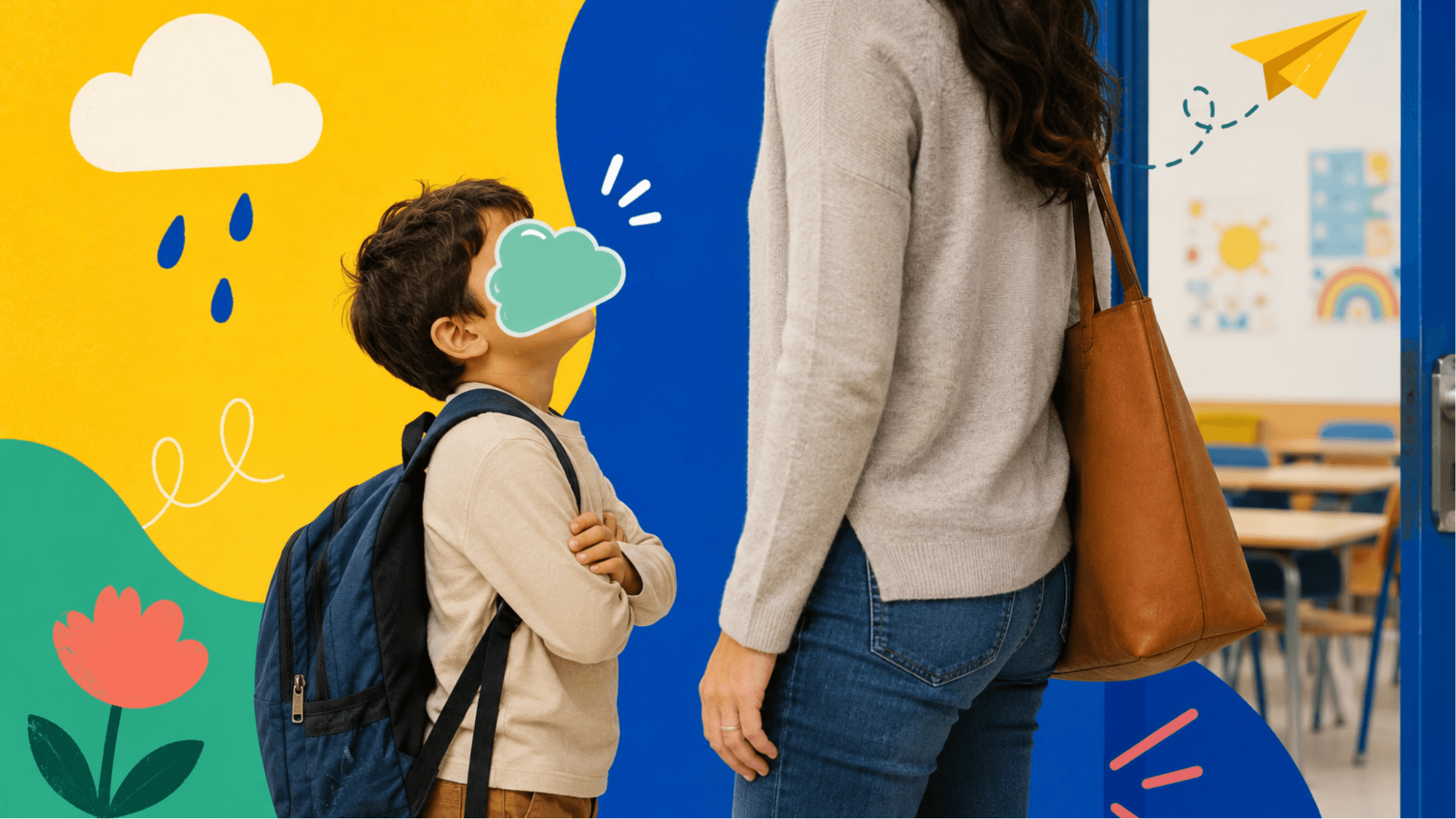

“My child hates school” is a hard thought to sit with.
So most parents try to fix it. They encourage, motivate, and push through, hoping things will improve. But when school distress doesn’t get any better, it often points to something deeper. Your child may not hate learning. They may be struggling with the school environment itself.
Sometimes, the answer isn't helping your child fit that environment. It's finding a setting that fits your child. That's why some families explore alternatives like bina, where children learn in small online classes with more flexibility, support, and individual attention.
Let's take a closer look at the reasons your child might hate school, what your child’s behavior could be telling you, and what to do next.
Key takeaways
- If your child hates school, they're often struggling with the environment rather than learning itself.
- School distress can be caused by bullying, anxiety, sensory overwhelm, or feeling like they don't belong.
- The right learning environment can help your child rebuild confidence and enjoy learning again.
- See how bina helps children rediscover the joy of learning.
What it looks like when your child hates school
Children often show they're struggling through their behavior long before they find a way to explain it.
This is especially true if your younger child or kindergartner hates school. They simply might not have the words to tell you what's wrong.
Instead, you might notice they:
- Refuse to go to school or struggle in the mornings
- Have regular headaches or stomach aches on school days
- Have meltdowns or emotional outbursts after school
- Lose interest in learning or withdraw from activities
These signs don't always mean your child hates school. They can have many causes, but if they happen regularly or appear together, they're worth exploring further.
Refusing to go or struggling in the mornings
You might notice:
- Tears before school
- Refusing to get dressed
- Constant delays or excuses
- Sunday night anxiety
London Psychiatry Clinic links school refusal with school-related anxiety and emotional distress. Your child may not be reacting to the morning routine itself, but to what comes after it.
If these feelings ease on weekends or during school holidays, it could be a sign that the school environment is contributing to the distress.
Saying they feel sick or want to stay home
Your child complains of headaches or a sore tummy, but by lunchtime they're back to their usual self.
London Psychiatry Clinic identifies headaches, stomach aches, and other unexplained physical symptoms on school days as common signs of school-related anxiety. Physical symptoms are often a child's way of communicating distress before they have the words to explain it.
Sudden behavior changes after school
Your child seems fine at school, but once they're home they:
- Cry over small things
- Become unusually angry
- Withdraw from family
- Completely shut down
Research published in Educational and Child Psychology links meltdowns, aggression, and irritability with school distress. In other words, after-school meltdowns may be a sign that they find school distressing, rather than misbehavior.
Losing interest in learning or withdrawing
Perhaps your child once loved learning, but now they:
- Avoid schoolwork
- Stop talking about what they're learning
- Seem disengaged in class
- Appear less confident
The same Educational and Child Psychology research suggests this can happen when the school environment, pace, or expectations aren't the right fit. Your child hasn't stopped being capable. They may simply be using so much energy coping with the school day that there's very little left for curiosity or learning.
Why does my kiddo hate school? (And it’s not just attitude)
When your kid says they hate school, it's easy to assume they're being difficult or unmotivated. The research paints a different picture.
The environment feels overwhelming
School asks children to manage noise, transitions, changing teachers, social cues, organization demands, and constant sensory input. When simply getting through the day takes all their energy, learning often becomes secondary.
The learning approach isn't working
Most classrooms teach a group of children at the same pace and in the same way. Research by the Organization for Economic Co-operation and Development (OECD) suggests learning improves when teaching can adapt to individual needs.
This is why personalized approaches, like those at bina, can make a difference.
If a class or subject feels constantly too fast, too slow, or disconnected from how your child learns, frustration replaces curiosity.
They don't feel they belong
School is a social environment as much as an academic one. Social skills, friendships, confidence, group dynamics, and even teacher fit all shape how safe your child feels. The constant pressure of all these factors at once can feel all-consuming.
Research by Fisher et al. found that some children withdraw from school as a form of self-protection when an environment feels overwhelming or unwelcoming. Many spend the day masking their feelings, then release them at home through anxiety and meltdowns.
They have very little control
In traditional public education, kids are told where to be, what to learn, when to learn it, and how to do it. But OECD’s research links autonomy with motivation and engagement. So when children feel they have no ownership over their day, learning can start to feel like something being done to them rather than something they actively participate in.
What to do when your child hates school
You’re lying in bed at night with the same questions spinning round in your mind.
“Why does my kindergartener hate school?” “Why does my middle schooler get upset every morning?” “Why is my kid so apathetic to learning?”
You’re not alone. And you don't need to solve everything at once. Start by gathering clues.
- Ask specific questions: Instead of "Why don't you like school?" ask what felt hardest, most uncomfortable, too loud, too fast, or too boring. Children often find it easier to talk about tangible moments than abstract feelings.
- Look for patterns: Notice when the distress appears. Is it before school, after school, during certain subjects, or around particular friendships? Repeated patterns often reveal the real blocker.
- Talk to your child's teacher: Share specific observations rather than general concerns. Ask when your child seems most engaged, confident, or challenged.
- Reduce pressure at home: Give your child time to decompress after school. Try not to turn homework, attendance, or school conversations into daily battles.
- Protect your child's confidence: Remind them that struggling in one environment doesn't mean they're incapable. The situation may not be working for them, but that doesn't make them the problem.
After all, school shouldn’t feel like something your child has to endure. Understanding what's behind the struggle is often the first step to helping them find safety and security. If these steps don’t change the experience, exploring alternatives like online schools may help.
What if school is the problem? When to consider a different approach
If anxiety, morning battles, physical symptoms, or after-school meltdowns have become the pattern rather than the exception, it may be time to ask a different question.
What if conventional school simply isn't the right fit for your child right now?
When support within school isn't changing the experience, exploring a different environment or approach to learning can be the next step.
Alternative options if your kid hates school
Here are some of the ways parents change their child’s school environment.
Full homeschooling
Best for: Families who want complete control over their child's education.
Homeschooling gives you the freedom to choose:
- What your child learns
- How they learn
- When learning happens
For some children, stepping away from the traditional school system creates the space they need to reconnect with learning.
Things to consider: You'll also be responsible for choosing a curriculum, planning lessons, tracking progress, and keeping learning on track. For many parents, that can become a full-time job.
Homeschooling with guided resources
Best for: Families who want the freedom and choice of full homeschooling with extra support.
You stay in charge, but use resources such as:
- Online learning programmes
- Tutors
- Structured curricula
- Workbooks
This reduces the pressure of creating everything from scratch while giving your child more direction.
Things to consider: You'll still be coordinating lessons, managing schedules, and leading your child's education.
Full-time online schools with personalized learning
Best for: Families who want the structure of school without the parts that aren't working.
Children benefit from:
- Qualified teachers
- A clear daily routine
- A connected curriculum
- Learning from home
For many children, that means they can focus on learning without crowded classrooms, constant transitions, or sensory overload.
Schools like bina build on this approach.
The goal isn't just to help your child cope with school. It's to help them enjoy learning again.
bina is built around the idea that when children feel understood, supported, and confident, learning becomes something they look forward to.
At bina, children learn in a calm, structured environment where they can build friendships, make meaningful connections across subjects, and benefit from consistent guidance from experienced teachers. No crowded classrooms, constant transitions, or sensory overwhelm that can make learning feel so difficult.
Why bina works for children experiencing school distress
If you've reached the point where you're dreading school days, you're probably looking for more than academic support. You're looking for an environment where your child can feel safe, confident, and excited to learn again.
Here's how bina is different:
- A calmer school experience with fewer sensory distractions and less overwhelm
- Small classes where every child is known and supported
- Learning that adapts to your child, not the other way around
- Project-based lessons that make learning more meaningful
- The flexibility of an online school that fits around your family's life
A calmer school environment
Instead of navigating a busy public school environment, bina gives children a calmer place to learn, with:
- Fewer visual distractions and less sensory input
- More predictable routines
- Time to focus without constant transitions
- A safe space where learning can take center stage
Every child is known
Children who are quiet, anxious, or masking how they feel can easily slip under the radar in larger class sizes.
At bina, every child is genuinely known by their teachers.
Small classes with two educators make it easier to:
- Notice when a child is struggling
- Adapt support before frustration builds
- Encourage participation without pressure
- Build strong relationships based on trust
Learning that rebuilds confidence
When a child repeatedly feels rushed, lost, or left behind, it's easy for them to believe they're "just bad at school."
At bina, learning is designed to meet children where they are.
Using our precision education approach, children can:
- Spend longer building understanding when they need to
- Move ahead when they're ready
- Learn in ways that suit different learning styles
- Experience success more often than frustration
Learning that feels connected
Children are naturally curious. The challenge is keeping that curiosity alive.
Instead of jumping between disconnected class topics, bina connects subjects through meaningful projects and biome-based themes.
This creates a learning experience that’s more than just a way to pass standardized testing. Kids are solving problems, asking questions, exploring STEM activities, and making connections between ideas that help learning feel relevant and memorable.
Flexibility for the whole family
Every family is different.
Some travel. Some worldschool. Some children train for a sport or performing arts. Others simply need an online school that fits around their life rather than asking life to fit around school.
bina provides a consistent education wherever your family happens to be, so children can keep learning with the same teachers, classmates, and curriculum while continuing to pursue the things they love.
Finding what actually works for your child
If your child hates school, it doesn't mean they hate learning. More often, it's a sign that something about the environment, pace, or approach isn't working for them right now.
Your child deserves an education that challenges them without overwhelming them, supports them without changing who they are, and helps them feel excited about learning again.
If you're wondering what that could look like, start your journey with bina. Fill out our form, and we’ll reach out to set up a brief intro call. Sometimes, seeing your child in a different environment is the moment everything starts to make sense.
Accredited, full-time school for grades K-12
Bring the best of the classroom to your home
See if we're a fit

More to read
What is an accredited online school? A parent’s guide to why it matters
Learn what accreditation means, why it matters for online schools, and how to verify a school’s credentials before enrolling your child.


Learning styles for kids: A practical guide for parents
Understand how your child likes to learn to keep them engaged with school. Help them become more adaptable by combining learning styles for kids.
Online school vs. public school: Which is best for your child?
Learn how online school compares to public school regarding curriculum, flexibility, cost, and support. See why online learning may be the better fit.